
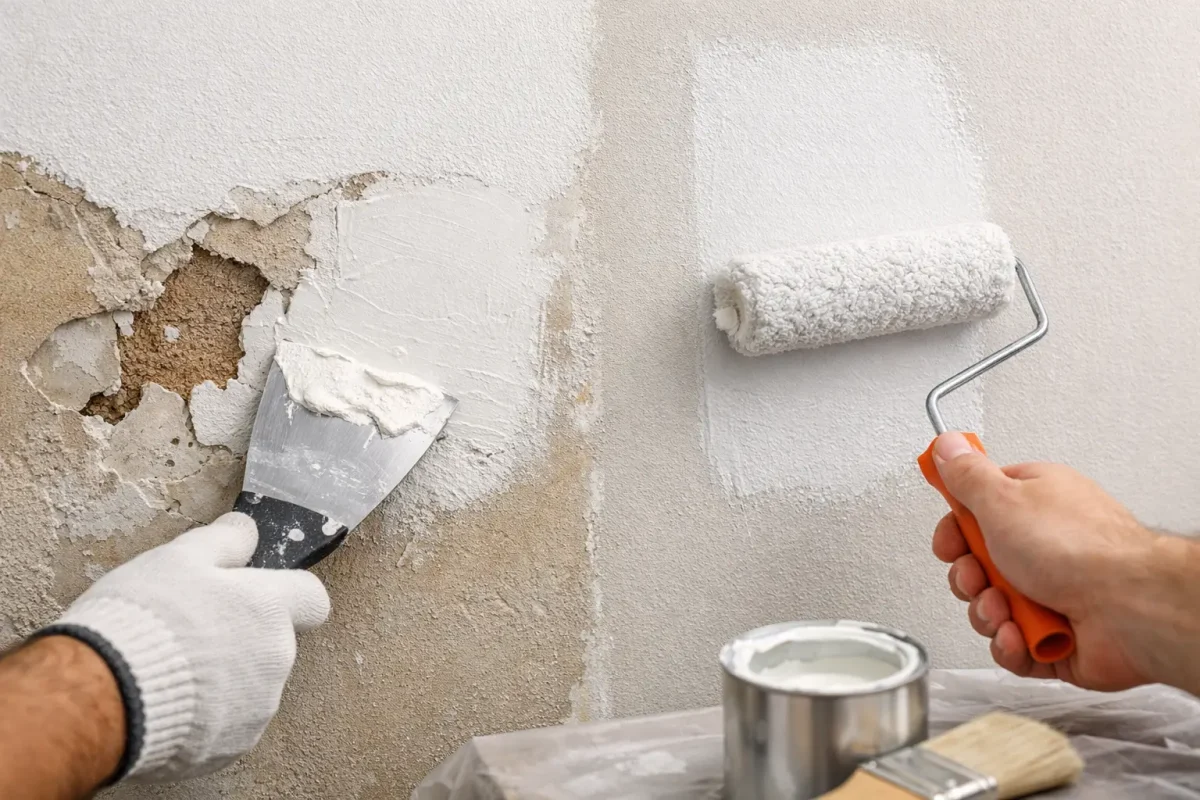
Fresh paint does not hide bad plaster. It usually does the opposite – once light hits the wall, every crack, blister, patch edge and hollow spot becomes easier to see. That is why plaster repair before painting matters so much, whether you are preparing a tenancy fit-out, refurbishing a reception area or updating a home interior.
If the substrate is unsound, the paint system can only do so much. A neat topcoat over loose, damaged or poorly repaired plaster may look acceptable for a short time, but defects tend to reappear quickly. In commercial settings, that means presentation issues, repeat attendance and disruption you were trying to avoid in the first place.
Why plaster repair before painting matters
Painting is often treated as the visible part of the job, but the finish is only as good as the surface beneath it. Plaster problems affect adhesion, sheen, texture and long-term durability. Even a premium coating will struggle if it is applied over cracking joints, moisture-damaged plaster or repairs that have not been properly dried and sanded.
This is where many projects go off track. A wall may look mostly sound at first glance, so the repair stage gets rushed to keep programme and cost under control. The result is usually false economy. Small defects left untreated can remain visible through the final coat, while larger issues can cause peeling, staining or movement later on.
For property managers and business owners, that has a practical cost. Rework creates more access issues, more tenant complaints and more downtime. Done properly the first time, plaster preparation supports a cleaner finish and reduces the chance of early failure.
What should be repaired before painting?
Plaster repair before painting is not only about obvious holes. The real issue is identifying anything that may affect the final finish or the performance of the coating system.
Common examples include hairline cracks, impact damage, dents, popped fasteners, flaking previous repairs, soft spots, water staining and blown plaster. Joint lines in plasterboard can also telegraph through paint if they have moved or if the original stopping was poor. In older buildings, you may also find areas where previous patching has created uneven suction or texture differences across the wall.
Not every defect needs the same response. A minor settlement crack might only need opening, filling and sanding. A larger recurring crack may point to movement and need a more stable repair approach. Water damage is another case where it depends. Treating the stain alone is not enough if the moisture source has not been addressed.
That is one reason a professional assessment matters. The right repair is not always the fastest one.
Surface issues that paint will not hide
There is a persistent idea that a thick paint, low sheen finish or darker colour will cover imperfect plaster. In practice, that is unreliable. Paint can soften the appearance of minor variation, but it does not correct a poor surface.
Raking light is often the problem. In offices, corridors, lobbies and residential living areas, natural light or overhead fittings can expose every ripple and patch edge. Gloss and semi-gloss finishes make this even more obvious, but low sheen surfaces are not immune. If the plaster has not been levelled and feathered properly, the finish will read as inconsistent.
Texture mismatch is another common issue. A repaired section may be flat while the surrounding wall has a subtle roller texture or aged surface profile. Once painted, that patch can stand out more, not less. Good preparation includes blending the repair so the wall reads as one surface rather than a collection of patches.
The right process for plaster repair before painting
A reliable result comes from sequence and patience. First, the damaged area needs to be assessed so the repair matches the defect. Loose material should be removed, unstable edges trimmed back and any source issues, such as leaks or impact risks, considered before patching begins.
The repair itself needs to suit the substrate and depth of damage. Shallow imperfections may only require a fine filler. Deeper damage often needs layering so the material cures correctly and does not shrink excessively. Cracks may need reinforcing tape or a broader feathered repair depending on the cause and location.
Once repaired, the area must be allowed to dry fully. This sounds straightforward, but it is one of the most common causes of poor outcomes. If filling compounds are sanded too early or coated before they are properly cured, you can end up with sinkage, flashing or adhesion problems.
After drying, the repair should be sanded smooth and checked under suitable lighting. Primer then plays a key role. Bare plaster, joint compound and patched surfaces can absorb paint differently from surrounding areas. A suitable sealer or primer helps even out porosity and supports a more uniform topcoat finish.
When a patch repair is enough – and when it is not
Some walls only need localised repair. A few dents in a corridor, minor impact damage in a tenancy or isolated cracking around a doorway can often be dealt with efficiently without wider resurfacing. In these cases, a targeted repair and repaint can be the sensible option.
Other situations call for more than patching. If a wall has widespread cracking, repeated patch history, multiple substrate failures or visible undulation across large areas, spot repairs may leave the finish looking inconsistent. The same applies when presentation standards are high, such as front-of-house commercial spaces, display areas or premium residential interiors.
This is where a broader skim, lining or sectional replacement may deliver a better result than repeated local repairs. It may cost more upfront, but it can save time and money over the life of the asset by reducing callbacks and improving durability.
Timing matters more than most people think
Plaster repair before painting is often squeezed between other trades and final decoration. That creates pressure to move fast, especially in live environments where access windows are limited. The problem is that plaster products work to drying times, not deadline pressure.
Humidity, temperature, ventilation and repair depth all affect cure time. In a sealed commercial space or during cooler periods, drying can take longer than expected. If the programme does not allow for that, painting may proceed on a surface that is not ready.
The visible consequences include joint banding, dull patches, uneven sheen and witness marks around repairs. The less visible issue is durability. A finish applied too early may not perform as intended, particularly in areas exposed to cleaning, traffic or changing internal conditions.
A managed programme avoids that problem. It coordinates repair, drying, sanding, priming and painting in the right order so one rushed stage does not compromise the next.
Commercial properties need a more controlled approach
In occupied commercial settings, plaster repairs are rarely just about walls. Access, dust control, safety, tenant communication and timing all matter. Repair works in a school, office, retail tenancy or strata complex need to be planned so they do not create unnecessary disruption.
That is why many clients prefer a single contractor who can manage the repair and painting scope together. It reduces handover gaps between trades, improves accountability and makes it easier to maintain programme control. For a business like WADECO, that joined-up approach is part of delivering a finish that looks right and holds up under real use.
It also helps with decision-making on site. If additional defects are uncovered once preparation begins, they can be assessed in context rather than pushed into a separate trade process that delays completion.
What to look for before approving paintworks
Before paint is applied, repaired areas should feel solid, level and dry. Edges should be feathered out cleanly, not abrupt. Under good lighting, the surface should read consistently without obvious hollows, ridges or sanding marks.
It is also worth checking that stains have been properly treated and that any cause of failure has been resolved. Painting over a repaired water-damaged area without fixing the moisture source is a short-term cosmetic fix. The same goes for movement cracks that have not been properly assessed.
Good contractors will explain where a repair is straightforward and where there is a risk of recurrence due to underlying conditions. That kind of advice matters because not every defect can be permanently eliminated by decoration alone.
A wall that looks sound before painting gives the coating system a fair chance to perform. That is the point of the repair stage – not to slow the job down, but to make sure the finish earns its keep long after the painters have left site.
If you are planning repainting works, the best results usually come from treating plaster preparation as part of the paint job, not a separate afterthought.







9 Comments
[…] is also worth looking at trade coordination. Offices often need more than paint alone. Minor plaster repairs, silicone replacement, carpentry touch-ups or electrical removal and refit may all be required to […]
[…] is where many programmes slip. A wall that appears ready for painting may need plaster repairs. A flooring upgrade may reveal uneven substrates. Ceiling access may expose electrical or […]
[…] clear site assessment prevents the common problem of discovering damaged plaster, water staining or failing sealant once painting is already under way. If repairs are needed, […]
[…] surfaces, access requirements, defects and any associated repairs. Peeling coatings, water damage, cracked plaster, corroded steelwork or failed sealants should be addressed before decorative painting […]
[…] alone may not solve the problem. Corner guards, wall protection sheets or a coordinated repair to damaged plasterboard may be required. Addressing the cause of damage is generally more effective than repainting the […]
[…] affects another. A water-damaged wall, for example, may need the source of the leak resolved before plastering, preparation and repainting can […]
[…] is just as important as the covering itself. Healthcare buildings often have a mix of aged plaster, plasterboard repairs, previously painted walls and areas affected by moisture or movement. Applying a new finish over an […]
[…] growth can follow. Where there is an underlying plumbing, roof, façade or condensation issue, the appropriate repair should be completed first, with enough drying time allowed before decoration […]
[…] plasterboard is sound, loose or flaking paint is removed, minor cracks are prepared and joints are repaired with suitable compounds and reinforcing tape where required. The surface is then sanded to achieve […]