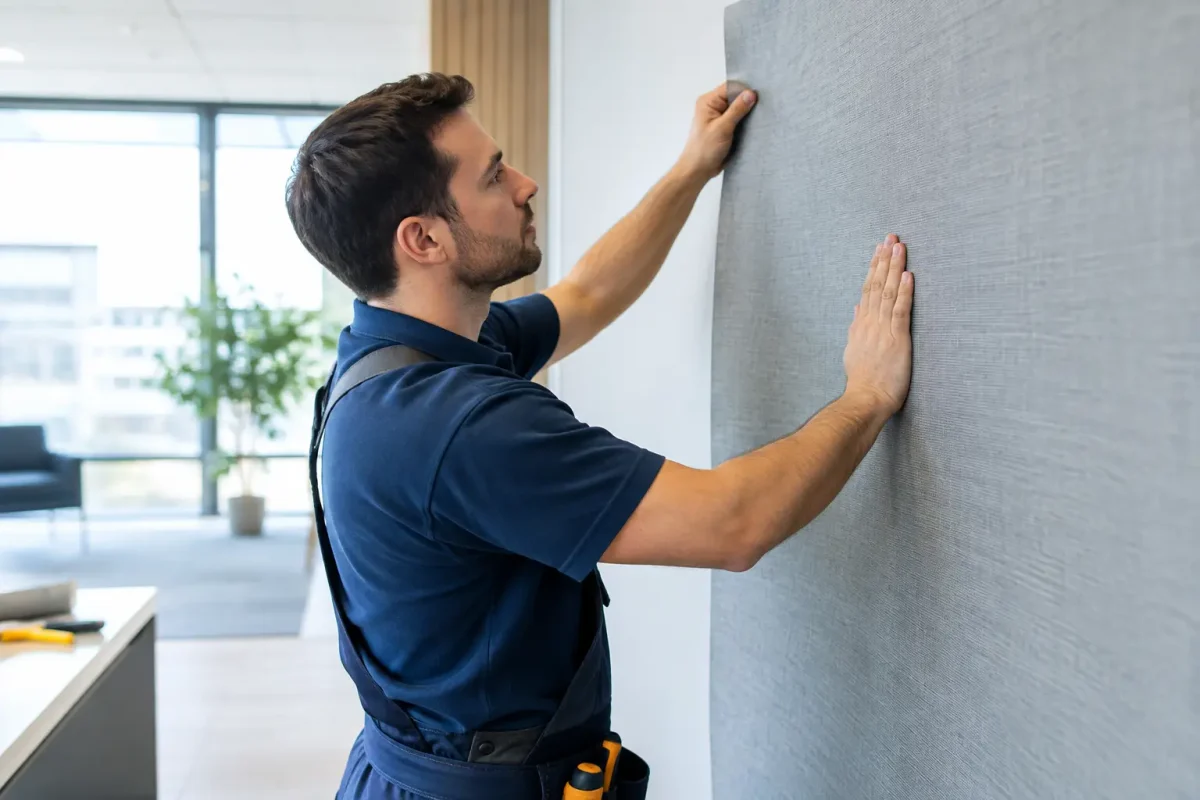
A reception wall with lifting seams, uneven pattern joins or scuffed edges is noticed long before a fresh coat of paint. Professional office wall covering installation is therefore not simply a decorating task. It is a planned refurbishment activity that needs the right product, sound wall preparation, careful trade coordination and a programme that respects how your workplace operates.
For offices, strata buildings, healthcare settings, education facilities and commercial tenancies, wall coverings can deliver a durable, high-quality finish in areas where appearance and everyday wear both matter. The result depends on what happens before the first length is hung.
Why wall coverings suit commercial interiors
Wall coverings offer more than decorative impact. Textured vinyl, fabric-backed vinyl and other commercial-grade products can help protect high-traffic corridors, meeting rooms, reception areas and lift lobbies from knocks, marks and repeated cleaning. They can also add warmth and character to spaces that would otherwise feel plain or institutional.
The right specification depends on the room and how it is used. A client-facing reception may call for a premium textured finish that supports the fit-out design. A busy corridor may need a scrubbable, impact-resistant vinyl that will stand up to regular cleaning and trolley traffic. In rooms with changing humidity or limited ventilation, adhesive selection and substrate preparation become even more important.
Wall covering is not always the best answer. Paint may be more cost-effective for large, simple areas where future colour changes are likely. However, in spaces that take regular wear or need a more distinctive finish, a properly installed commercial wall covering can provide strong long-term value.
Start office wall covering installation with a site survey
The wall surface sets the standard for the finished job. Wall coverings can conceal minor visual imperfections, but they will not correct loose plaster, moisture movement, failed paint, poor patching or an uneven substrate. In some cases, they make those issues more visible.
A thorough site survey should establish the condition of each wall, identify previous coatings or existing coverings, and check for signs of moisture damage. It should also confirm access requirements, ceiling heights, the location of services and whether furniture, screens or signage need to be removed or protected.
This is where commercial experience saves time later. A wall may look straightforward until old adhesive is uncovered, a plaster repair is required around a door frame, or an electrical outlet needs to be temporarily removed and reinstated. Addressing these items in the scope and programme is far better than discovering them after the work area has been set up.
For occupied premises, the survey should also consider operational constraints. Noise restrictions, customer access, security procedures, after-hours working and safe separation from staff are all part of a realistic installation plan.
Preparation determines the finish
Good preparation is not an optional extra. It is the foundation for clean joins, reliable adhesion and a finish that remains presentable over time.
Depending on the existing condition, the process may involve removing failed paint or old wall covering, cleaning contamination from the surface, repairing cracks and impact damage, filling and sanding irregular areas, then applying the correct sealer or primer. The aim is to create a smooth, stable and suitably porous surface for the adhesive system.
New plasterboard and recently repaired areas require particular attention. Differences in porosity can affect how adhesive dries and how the finished surface looks. Priming ensures a more consistent bond and can make future removal less destructive if the space is refurbished again.
Moisture concerns must be resolved before installation. Covering a damp wall may hide the evidence temporarily, but it does not solve the cause. Adhesive failure, staining and mould growth can follow. Where there is an underlying plumbing, roof, façade or condensation issue, the appropriate repair should be completed first, with enough drying time allowed before decoration begins.
Material selection is a practical decision
The appearance of a sample book is only one part of the decision. Commercial wall coverings need to suit the location, cleaning regime, lighting and expected lifespan of the fit-out.
Vinyl wall coverings are often selected for their durability and cleanability, making them suitable for corridors, reception areas and other hard-working spaces. Textile or natural-look finishes can create a more refined result in boardrooms and executive areas, although they may demand more careful maintenance. Patterned designs can make a strong visual statement but require accurate setting out and additional material for pattern matching.
Lighting should be assessed before approving a product. Side lighting from windows or downlights can highlight surface variation and joins, particularly on darker colours or highly textured materials. A sample viewed under the actual office lighting gives a more reliable indication than a small piece assessed elsewhere.
Allow for spare stock as part of the order. Keeping labelled surplus material on site can make a future localised repair more straightforward, particularly where a design is discontinued or batches vary slightly over time.
Plan access, sequencing and other trades
The best installation can still become disruptive if the programme is poorly organised. Office wall covering installation works best when it is sequenced around other finishing trades and the operational needs of the building.
Painting, plastering, electrical works, joinery and flooring all affect walls in different ways. For example, wall coverings should not be installed before wet trades have dried, while electrical faceplates and certain joinery elements may need to be removed or fitted at a specific stage. Poor sequencing creates avoidable damage, rework and delays.
A single point of contact is particularly useful where more than one trade is required. Rather than asking a facilities manager to chase a plasterer, painter, electrician and installer separately, the work can be planned as one coordinated package. WADECO manages complementary maintenance and refurbishment works alongside painting, decorating and wall covering services, helping clients keep responsibility clear from start to finish.
For occupied offices, work can often be staged by room, floor or zone. Furniture can be moved and protected in planned sections, allowing teams to continue operating elsewhere. Evening or weekend works may be sensible for reception areas and high-traffic routes, but this needs to be balanced against building access, security and any additional costs.
What a professional installation should include
Once preparation, materials and access are in place, installation is a controlled process rather than a rush to cover the wall. The installer establishes plumb lines and starting points so patterns sit straight and balanced around doors, windows and prominent features. This is especially important in reception areas, where a poorly positioned join can be immediately obvious.
Adhesive must be selected and applied in line with the wall covering manufacturer’s requirements. Too much, too little or the wrong type of adhesive can cause bubbles, open seams and premature failure. Temperature, ventilation and drying conditions also affect the result, so the work area needs to be managed accordingly.
Finishing details matter. Neat trimming around switches, power points, skirting, door frames and service penetrations separates a professional job from a cosmetic cover-up. Edges should be secure, joins aligned and surfaces checked for trapped air, adhesive residue or damage before the area is handed back.
A quality check at completion should include more than a quick look from the doorway. Review the walls under normal lighting, confirm that furniture and fittings have been reinstated properly, and ensure the work area is clean and ready for use. Any agreed defect items should be recorded and resolved promptly.
Protect the investment after handover
Commercial wall coverings are durable, not indestructible. Cleaning methods should suit the product, particularly for textured, metallic or fabric-effect finishes. Abrasive pads, harsh solvents and uncontrolled moisture can damage the surface or edges.
Facilities teams should also act quickly when a wall is struck or an edge begins to lift. A small repair is usually simpler and less visible than waiting until damage spreads across several lengths. Retained spare material, accurate product records and photographs of the original installation all support efficient maintenance.
If your office needs a finish that improves presentation while standing up to daily use, begin with a proper site assessment. The right preparation, materials and programme will protect your workplace as carefully as the finished wall improves it.