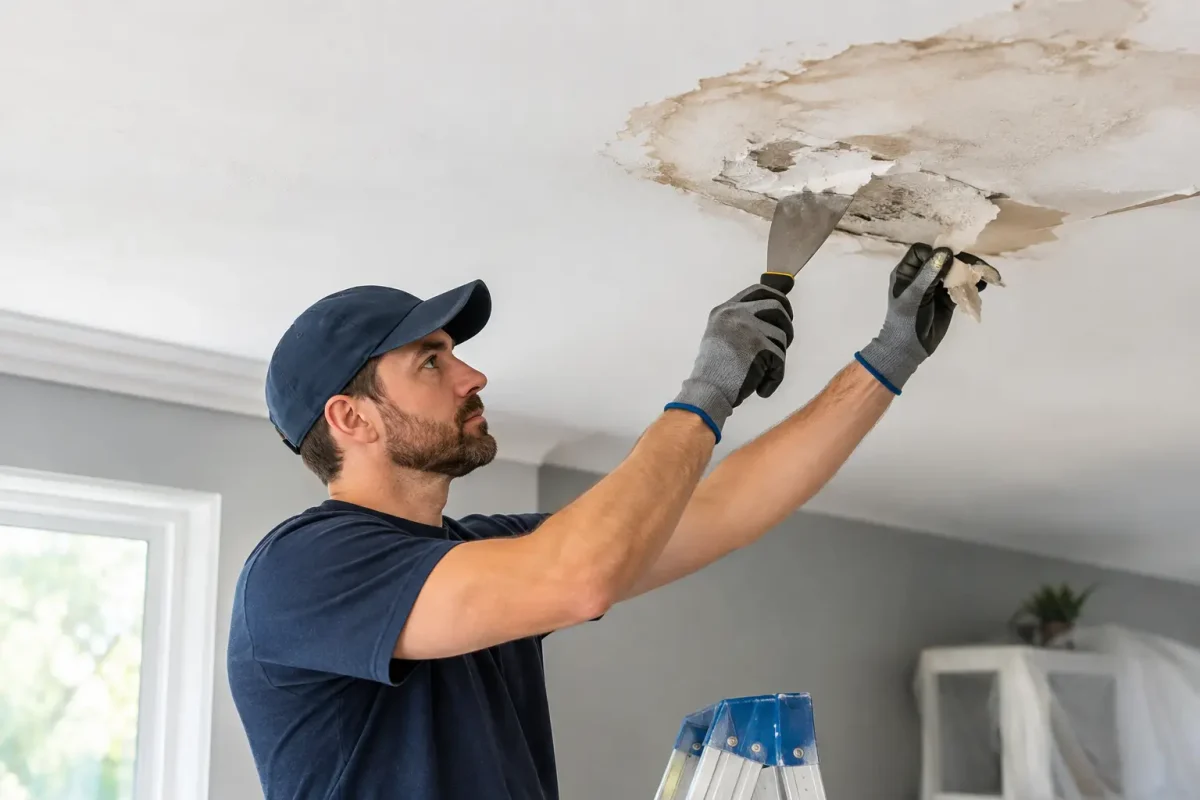
A brown ring above a boardroom table, a bubbling ceiling outside a bathroom or paint flaking over a tenancy fit-out is not simply a decorating issue. To repair water damaged ceilings properly, the source of moisture must be found and controlled before any plastering or painting begins. Otherwise, a fresh finish can fail quickly and the underlying damage can become more expensive.
For commercial properties, the priority is also keeping occupants safe and disruption under control. A ceiling can conceal wet insulation, compromised electrical services, mould growth and weakened plasterboard long before the visible stain looks serious.
Start by stopping the water source
A ceiling repair should never begin with stain blocker and paint. First establish where the water came from. Common causes include a failed roof flashing, blocked guttering, leaking pipework, air-conditioning condensate, shower waterproofing failure or a leak from the tenancy above.
The point where water appears is not always where it entered. Moisture can travel along roof framing, pipes, conduits and plasterboard before pooling at the lowest point. In a multi-level building, this may mean inspecting the room above as well as roof spaces, service risers and plant areas.
If water is still active, isolate the affected service where it is safe to do so and arrange the appropriate trade. Electrical fittings near a wet ceiling require particular caution. Do not remove light fittings, disturb wiring or assume an apparently dry surface is safe. A qualified electrician should assess any affected electrical components before reinstatement.
For facilities managers and strata stakeholders, documenting the initial condition is sensible. Record the location, date, visible damage and likely source, particularly where an insurer, landlord, tenant or body corporate may be involved.
Assess whether the ceiling can be repaired
Not every stained ceiling needs to be removed. A small, old stain on a fully dry and sound plasterboard ceiling may only need preparation, sealing and repainting. The decision changes where the board has softened, sagged, cracked, delaminated or remained wet for an extended period.
Pressing on a suspect area is not a reliable test if there is a risk of collapse. Look instead for visible sagging, swollen joints, blistered paint, rusty fasteners, a persistent musty odour or staining that continues to spread. Plasterboard that has absorbed a significant volume of water can lose its structural integrity even after the surface dries.
Ceilings with decorative cornices, ornate plasterwork, acoustic panels or fire-rated linings need a more considered assessment. Replacing a section may affect appearance, acoustic performance or the building’s fire separation. In commercial settings, the repair scope should account for the specification of the existing system rather than treating every ceiling as standard plasterboard.
Drying comes before reinstatement
A ceiling needs to be thoroughly dry before repairs proceed. Opening up wet sections may be necessary to expose the cavity, allow airflow and inspect insulation, framing and services. Depending on the extent of the leak, professional drying equipment and moisture testing may be required.
Rushing this stage is a common cause of repeat failures. Patching over damp material traps moisture in the assembly, which can lead to mould, peeling paint and recurring stains. It can also create an avoidable disruption later when the area needs to be opened again.
If there is visible mould, extensive water exposure or contaminated water from drainage or sewage, the work should be managed by suitably qualified professionals. Disturbing affected materials without appropriate containment and cleaning can spread contamination through occupied spaces.
How to repair water damaged ceilings after drying
Once the cause has been rectified and the ceiling is confirmed dry, the repair method depends on the material condition.
Where plasterboard is sound, loose or flaking paint is removed, minor cracks are prepared and joints are repaired with suitable compounds and reinforcing tape where required. The surface is then sanded to achieve a level finish. A stain-blocking primer is applied before the ceiling receives its finishing coats.
Where plasterboard has softened or sagged, the affected section is normally cut back to sound material and replaced. This may involve replacing insulation, repairing framing, reconnecting or relocating fittings, and making good cornices or access panels. New plasterboard needs to match the thickness and performance requirements of the existing ceiling, especially where a fire-rated or acoustic system is involved.
Traditional solid plaster ceilings can be more complex. Small, stable defects may be repaired, but loose plaster requires careful removal and reinstatement. Older properties may also contain materials that need specialist testing before disturbance. This is not the stage for assumptions, particularly in buildings with a long maintenance history.
Preparing for a finish that does not flash or stain
Ceilings show poor preparation quickly. Even where the damaged section is relatively small, a patch can appear darker, shinier or rougher than the surrounding area if it is not feathered and primed correctly.
A professional finish usually requires more than painting the repair itself. Depending on the age of the existing coating and the degree of colour variation, painting the full ceiling plane may be the most practical way to achieve a consistent appearance. This avoids a visible square patch above a reception desk, meeting room or residential living area.
The primer matters. Ordinary ceiling paint may not prevent tannin, rust or water marks from bleeding through. A suitable stain-blocking system should be selected for the substrate and the severity of the staining. Once sealed, quality ceiling paint applied evenly provides the clean, uniform finish occupants expect.
Managing repairs in occupied commercial properties
In an office, school, retail space, healthcare setting or strata common area, ceiling repairs need more than competent trade work. They need coordination. Access restrictions, tenant communication, noise controls, dust containment and work-hour requirements can all affect how the job is planned.
A small leak can also involve several trades: plumbing or roofing to fix the source, electrical work around fittings, carpentry for framing, plastering for the ceiling lining and painting for reinstatement. Managing those trades separately can create delays and leave responsibility unclear when work overlaps.
Using a single point of contact helps keep the sequence right. The leak is addressed first, the area is made safe, drying and assessment are completed, and repairs are programmed around the property’s operational needs. It also provides one accountable team for the finished result rather than a series of disconnected call-outs.
When a quick cosmetic repair is enough – and when it is not
A cosmetic repair can be reasonable when the moisture event was minor, the source has been permanently resolved, the ceiling has dried fully and there is no loss of material strength. For example, a light stain caused by a short-lived roof leak may only require stain sealing and repainting.
It is not enough when staining keeps returning, the ceiling has bowed, the board is soft, mould is present or electrical components may have been affected. The cost of opening and replacing a section is often lower than the cost of repeated painting, tenant complaints and an unexpected ceiling failure.
The same applies to roof leaks that only appear after heavy rain. A dry inspection on a clear day may not reveal the fault. Investigation may need to consider roof drainage, flashing details, penetrations and water paths rather than treating the ceiling stain as the whole problem.
Protect the property after the repair
Once reinstatement is complete, consider what will prevent a repeat incident. Regular roof and gutter maintenance, inspection of wet areas, planned servicing of air-conditioning drainage and prompt attention to minor leaks all reduce the likelihood of ceiling damage. In commercial buildings, recording recurring leak locations can reveal a wider maintenance issue that deserves a planned solution.
A repaired ceiling should look as though the incident never happened, but the process behind it should be deliberate. WADECO coordinates the complementary trades needed to investigate, repair and refinish water-damaged areas with minimal disruption, giving property stakeholders one accountable team from the first inspection to the final coat of paint.
If a ceiling is stained, sagging or showing new cracks, act before the damage becomes a safety issue. The right repair starts with finding the water, not covering the mark.