
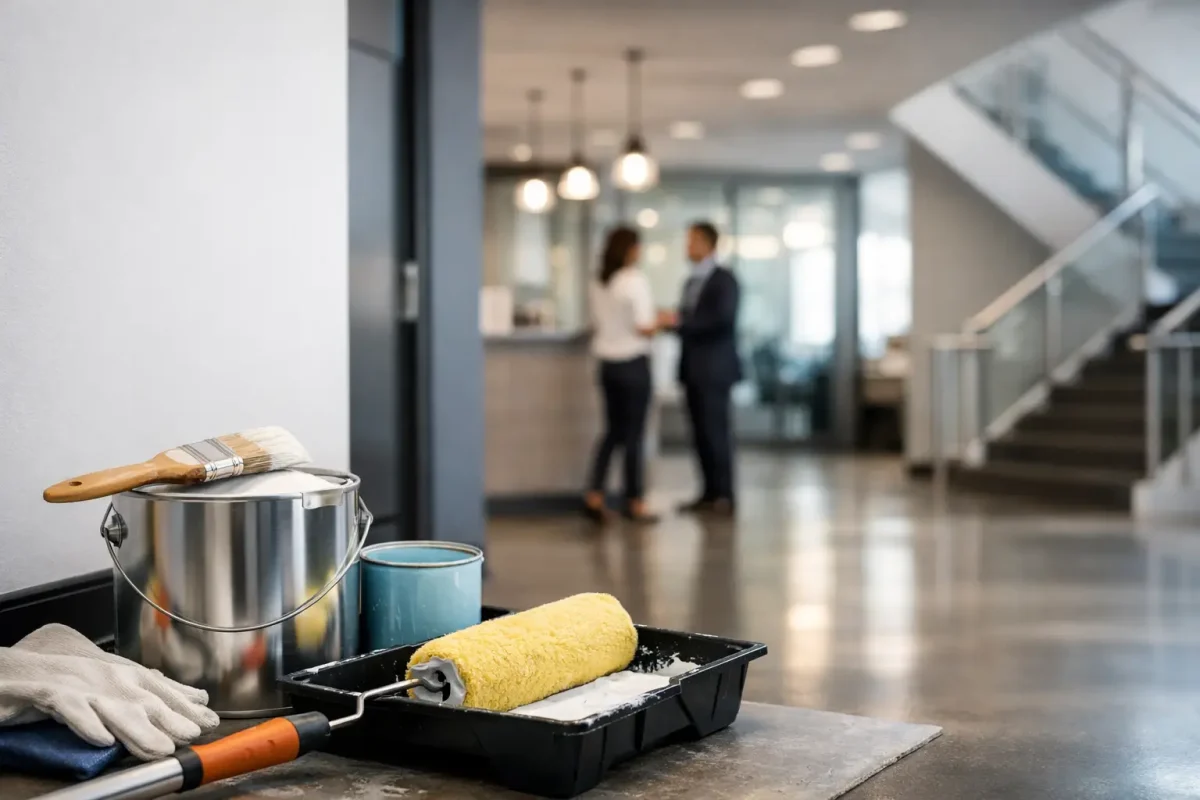
A scuffed corridor, marked reception wall or grubby stairwell can make an otherwise well-managed property look neglected. Choosing the best paints for high traffic areas is not simply about selecting a harder-wearing tin of paint. It means matching the coating system, surface preparation and sheen level to how the space is actually used.
For commercial properties, strata buildings, schools, healthcare settings and busy homes, the right paint reduces cleaning time, protects substrates and helps maintain presentation standards between scheduled maintenance works. The wrong choice can lead to early marking, patchy touch-ups, peeling and unnecessary disruption when repainting is needed again too soon.
What Makes a Paint Suitable for High Traffic Areas?
High-traffic paint needs to cope with more than footfall. Walls are exposed to hand marks, bags, trolleys, furniture movement, cleaning chemicals, moisture and repeated contact around doorways, switches and corners. A durable finish should resist staining and abrasion while remaining washable enough to clean without losing colour or developing a polished, patchy appearance.
The specification should also consider the condition of the existing surface. A premium topcoat will not compensate for loose paint, chalky plaster, water damage or poor repairs. Proper preparation, including cleaning, filling, sanding and priming where required, is what allows the finished coating to perform as intended.
In operational premises, drying and curing times matter too. A paint may feel dry within hours but can take considerably longer to reach full hardness. This should be factored into programming, particularly where walls will be cleaned frequently or exposed to heavy use immediately after completion.
Best Paints for High Traffic Walls
For most internal commercial walls, a premium low-sheen acrylic or washable acrylic paint is the practical starting point. It provides a clean, contemporary appearance with better scrub resistance than standard matt paint, while disguising minor surface imperfections more effectively than a higher-gloss finish.
Low sheen is particularly well suited to offices, common areas, corridors, reception spaces, classrooms and residential living areas. It offers a balanced finish: durable enough for regular cleaning, but not so reflective that every repair, dent or uneven section of wall is highlighted by artificial lighting.
Where stronger resistance is needed, a high-performance washable interior coating is often the better investment. These products are formulated to withstand repeated washing and are useful in entry foyers, lift lobbies, busy hallways and areas where hand marks are a constant issue. The higher upfront material cost can be justified when it extends repainting cycles and improves day-to-day presentation.
Washable acrylics for general commercial use
A quality washable acrylic is usually the most versatile option for occupied buildings. It has relatively low odour, dries efficiently and is available in a broad range of colours and sheen levels. It also allows maintenance teams to clean walls without immediately creating obvious rub marks.
However, not all washable paints perform equally. Economy paints may be labelled washable but can still burnish when scrubbed, especially in darker colours or lower sheen finishes. For prominent or heavily used locations, specifying a recognised commercial-grade product is generally more cost-effective than repainting affected sections every year.
Two-pack and epoxy coatings for demanding environments
Some areas require more than a conventional acrylic. Two-pack epoxy and specialist protective coatings offer exceptional resistance to chemicals, moisture, impact and aggressive cleaning regimes. They are often appropriate for commercial kitchens, plant rooms, workshops, service corridors, wash-down areas and certain healthcare or industrial settings.
These systems are not the default answer for every wall. They can have stronger odours, stricter preparation requirements and more complex application conditions. Their finish can also be less forgiving on imperfect substrates. The benefit is long-term protection where a standard decorative coating would quickly fail.
Anti-graffiti and protective clear coatings
In public-facing locations, vandalism and repeated marking may be the main concern. Anti-graffiti systems or compatible protective clear coats can make cleaning easier without requiring a full repaint after each incident. They are worth considering for stairwells, car parks, external access points and other exposed communal areas.
Compatibility is critical. A clear protective coating can alter sheen or deepen colour, so a sample area should be assessed before it is applied across a visible surface.
Choosing the Right Sheen Level
The finish affects both appearance and serviceability. There is no single sheen level that suits every high-use area.
Matt paint gives a soft, non-reflective look and conceals uneven walls well, but standard matt finishes can be difficult to clean. A durable washable matt can work in executive offices, meeting rooms and other spaces that need a refined appearance but still receive occasional marks.
Low sheen is the dependable all-round choice for many walls. It provides good washability and hides surface variation reasonably well. Satin and semi-gloss finishes are tougher again and are commonly used on doors, frames, skirtings, handrails and other trim exposed to knocks and frequent cleaning.
Higher sheen makes cleaning easier, but it also shows imperfections. On older walls with previous repairs, a high-sheen coating may draw attention to every patch and joint. This is why coating selection should be made alongside an honest assessment of the substrate and the required presentation standard.
Do Not Overlook Doors, Frames and Joinery
Walls receive most of the attention, yet doors and frames often take the hardest daily treatment. In schools, offices, medical facilities and flat common areas, these surfaces are touched, bumped and cleaned constantly.
A hard-wearing enamel or water-based trim coating is usually more suitable than wall paint for joinery. Modern water-based enamel systems offer lower odour and faster recoat times than traditional oil-based products, while providing a durable, smooth finish. In very high-abuse settings, specialist coatings may be required to resist impact, cleaning chemicals or moisture.
Colour selection also has a maintenance impact. Very dark colours show dust and scuffing; pure white can show every hand mark. Mid-tone neutrals, deeper skirting colours and carefully selected feature walls can help maintain a tidy appearance without compromising the design intent.
Preparation Determines Whether the Paint Lasts
A durable topcoat applied over a poorly prepared surface is still a poor system. Before painting high-traffic areas, surfaces should be assessed for adhesion problems, moisture, mould, cracks, impact damage and contamination from oils or cleaning products.
Loose and flaking paint must be removed. Glossy surfaces often need abrading to create a suitable key. Repairs should be feathered and primed where necessary so they do not flash through the final finish. Stains, water marks and nicotine contamination may require a dedicated stain-blocking primer rather than another coat of standard paint.
On previously painted walls, a test patch can prevent costly surprises. It helps confirm adhesion, colour coverage and whether the chosen finish reacts with or highlights the existing coating. This is particularly valuable in older buildings where the paint history is uncertain.
Plan Painting Around Building Operations
The best coating can still become a problem if works are poorly planned. High-traffic spaces are usually high-visibility spaces, and they may need to remain accessible throughout the project.
A practical painting programme considers access routes, occupant safety, ventilation, dust control and drying periods. Work can often be staged outside peak hours, section by section, to keep a reception, corridor or tenancy operational. Clear protection of floors, furniture and nearby services is equally important, particularly where several trades are working within the same refurbishment programme.
For larger sites, keeping accurate records of colours, products and sheen levels also makes future touch-ups more consistent. Even the best paints for high traffic areas will eventually need maintenance, and a documented specification avoids guesswork later.
When a Repaint Is Not the Only Answer
If walls are constantly damaged at a particular height or location, repainting alone may not solve the underlying issue. Corner guards, wall protection, kick plates, handrails or changes to furniture layout may provide a more durable outcome. In wet areas, improving ventilation or addressing water ingress should come before applying a new coating.
The most effective approach is to treat paint as part of a wider maintenance solution, not a cosmetic fix. WADECO can assess the condition of the area, coordinate necessary repairs and specify a coating system that suits the building, budget and expected level of use.
A well-chosen paint finish should make busy spaces easier to manage, not create another recurring maintenance issue. Start with how the area is used, prepare the surface properly and select a system designed to stand up to the work.



2 Comments
[…] spaces receive more wear than most residential interiors. Corridors, lift lobbies, amenities, stairwells and reception areas […]
[…] High-traffic interiors also benefit from planning. Corridors, foyers, stairwells, amenities, kitchens and shared facilities receive continual wear. Small dents, scuffs and damaged corners can quickly make an otherwise well-managed property feel neglected. Scheduling touch-ups, plaster repairs and repainting in a coordinated visit is usually less disruptive than responding to separate complaints throughout the year. […]