
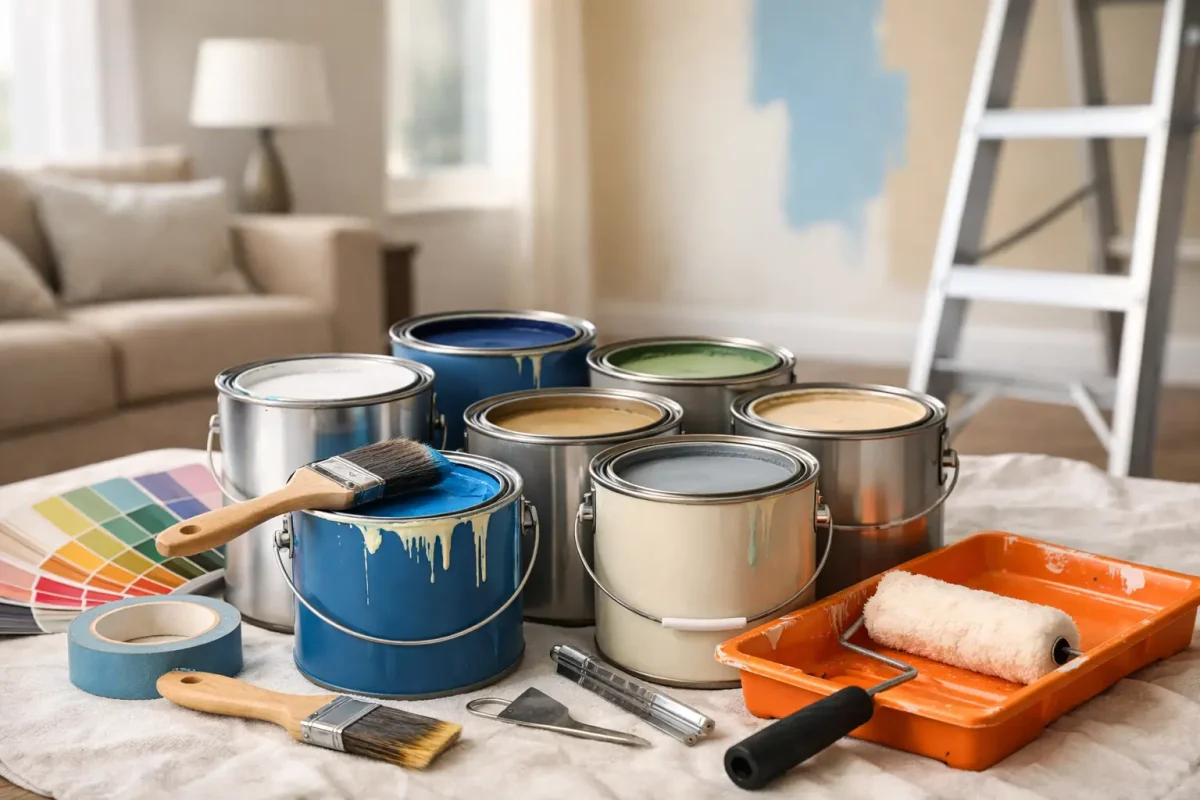
A freshly painted room can look excellent on day one and disappointing by month six. That usually comes down to two things – product choice and preparation. When clients ask about the best interior house paint brands, they are rarely just asking which tin is most expensive. They want to know which paint will cover well, hold its colour, cope with wear, and still look right after everyday use.
The honest answer is that there is no single brand that suits every project. A family home with high-traffic hallways needs something different from a premium living room finish. A rental property has different priorities again. The best result comes from matching the brand and product line to the room, the surface condition, and the level of durability required.
What makes the best interior house paint brands stand out?
Good interior paint does more than provide colour. It needs to apply evenly, cure properly, resist marking, and maintain a consistent finish across walls, ceilings and trim. Cheap products often look acceptable at first, but problems show up later as patchiness, poor washability, flashing or early wear.
For most interiors, the main differences between brands come down to coverage, finish quality, low-odour performance, washability and long-term appearance. Trade professionals also pay close attention to how forgiving a paint is during application. A product that drags, dries too fast, or highlights lap marks can turn a straightforward repaint into a slow and costly job.
That is why brand reputation matters, but only to a point. Even strong brands have entry-level ranges that suit basic refresh work rather than premium finishes. Looking at the label alone is not enough. The specific product line matters just as much as the name on the tin.
7 best interior house paint brands worth considering
1. Dulux
Dulux remains one of the best-known choices for interior painting, and for good reason. Its premium interior ranges are generally reliable, widely available and consistent in colour. For occupied homes and commercial environments, low odour and dependable washability make it a practical option.
It is often a safe choice for walls in living areas, bedrooms and hallways, particularly where a clean, even finish matters. The trade-off is price. Dulux is not usually the cheapest option, so it makes more sense when finish quality and durability are higher priorities than upfront savings.
2. Taubmans
Taubmans is another strong performer in the Australian market and regularly comes up in discussions around the best interior house paint brands. It offers good coverage and a broad colour selection, with premium lines that perform well in family homes and busy interiors.
Many property owners choose Taubmans when they want a balance between finish and value. It can be a sensible option for larger repaint projects where budget still matters, but cutting too far on product quality would be a false economy.
3. Haymes Paint
Haymes has built a solid reputation for premium quality, and many painters rate its higher-end products very highly for application and finish. It is often selected for projects where presentation standards are high and the client wants a more refined result.
This brand can be particularly appealing for residential interiors where appearance matters as much as durability. Depending on the range, it may cost more than budget alternatives, but that can be justified if you want stronger coverage and a more consistent finish across larger wall areas.
4. Wattyl
Wattyl has long been part of the paint market and still has a place in many interior projects. It can be a practical option for repainting work where value and serviceable performance are the main priorities.
That said, product selection matters here. Some Wattyl lines are better suited to straightforward maintenance painting than premium decorative work. If you are painting a rental, office, or utility area, it may be a sensible fit. For feature spaces where finish quality is under more scrutiny, you may want to compare premium alternatives first.
5. Resene
Resene is well regarded for colour range and finish quality. It is often chosen by clients who want more design flexibility or are after something less standard in terms of palette.
Performance is generally strong in the right product line, especially for well-prepared interior surfaces. The main consideration is practicality. Availability can vary depending on your location, and for larger or ongoing maintenance programmes, supply consistency is worth checking before you commit.
6. British Paints
British Paints is often considered by homeowners looking for a more budget-conscious option. For basic repainting, light-use rooms or cosmetic refreshes ahead of sale or lease, it can serve a purpose.
The trade-off is usually in coverage, finish depth and long-term wear when compared with premium lines from leading brands. That does not mean it is unsuitable. It simply means expectations should match the project. If durability and washability are important, there are usually stronger options.
7. Porter’s Paints
Porter’s Paints sits in a different space from the more general-purpose brands. It is known for specialty finishes, decorative products and a more design-led approach.
For standard whole-house repainting, it may not be the first choice. But if you want texture, depth, or a feature wall finish that feels less conventional, it can be the right brand for selected areas. As with any specialist coating, application standards become even more important.
How to choose between the best interior house paint brands
The right brand depends on what the room has to cope with. High-traffic corridors, children’s bedrooms, stairwells and commercial interiors need stronger washability and scuff resistance than low-use guest rooms. Kitchens and bathrooms may also need coatings better suited to moisture and regular cleaning.
Finish level matters as well. Flat and low-sheen paints tend to hide surface imperfections better, which is useful in older properties where walls are not perfectly true. Higher-sheen products are easier to wipe down, but they can also highlight poor preparation, patch repairs and uneven plastering.
Budget should be considered realistically. A cheaper paint that needs extra coats, marks easily, or requires repainting sooner can end up costing more overall. That is especially true in commercial settings, strata properties and managed assets where access, tenant coordination and downtime all add to the real cost of repainting.
Brand alone will not fix poor preparation
Even the best interior paint brands will underperform on poorly prepared surfaces. Flaking paint, grease, dust, water staining, filler sinkage and uneven porosity all affect the final result. A premium topcoat over a badly prepared wall is still a badly finished wall.
This is where experienced application makes a visible difference. Proper cleaning, filling, sanding, spot priming and substrate assessment are what allow the paint to do its job. On older properties or buildings with maintenance issues, identifying those surface problems early is often more important than debating between two premium brands.
For commercial and multi-room projects, consistency matters too. Different surfaces, varying light conditions and multiple trades working in the same space can all affect the final appearance. A well-managed painting programme keeps those variables under control and reduces the risk of rework.
When premium paint is worth it
Premium products are usually worth the extra cost when the space is busy, the finish is highly visible, or the repaint cycle needs to be extended. Reception areas, executive offices, retail interiors, main living areas and family circulation spaces all fall into that category.
They are also worth considering when disruption needs to be minimised. Better coverage and more predictable application can help keep programmes on track. For property owners and facilities managers, that matters just as much as the final look.
On the other hand, not every room needs the top shelf option. Store rooms, temporary tenancies and lower-priority spaces can sometimes be handled with a more cost-conscious specification, provided expectations are clear from the outset.
A practical way to make the right choice
If you are comparing the best interior house paint brands, start by asking what the room needs to withstand, how visible the finish will be, and how long you want it to last before repainting. That narrows the field quickly.
After that, focus on the full system rather than the brand in isolation – surface preparation, primer selection, product line, finish level and application method. That is how durable, professional results are achieved. On larger residential, strata or commercial work, getting advice from a contractor who can assess the surface conditions properly will usually save time, cost and frustration later.
A good paint brand helps, but a well-run job is what protects the result. Choose the product to suit the space, insist on proper preparation, and the finish will hold up long after the paint tins are gone.







1 Comment
[…] every paint should be heavily thinned. Many modern paints are designed to be sprayed as supplied, or with only […]