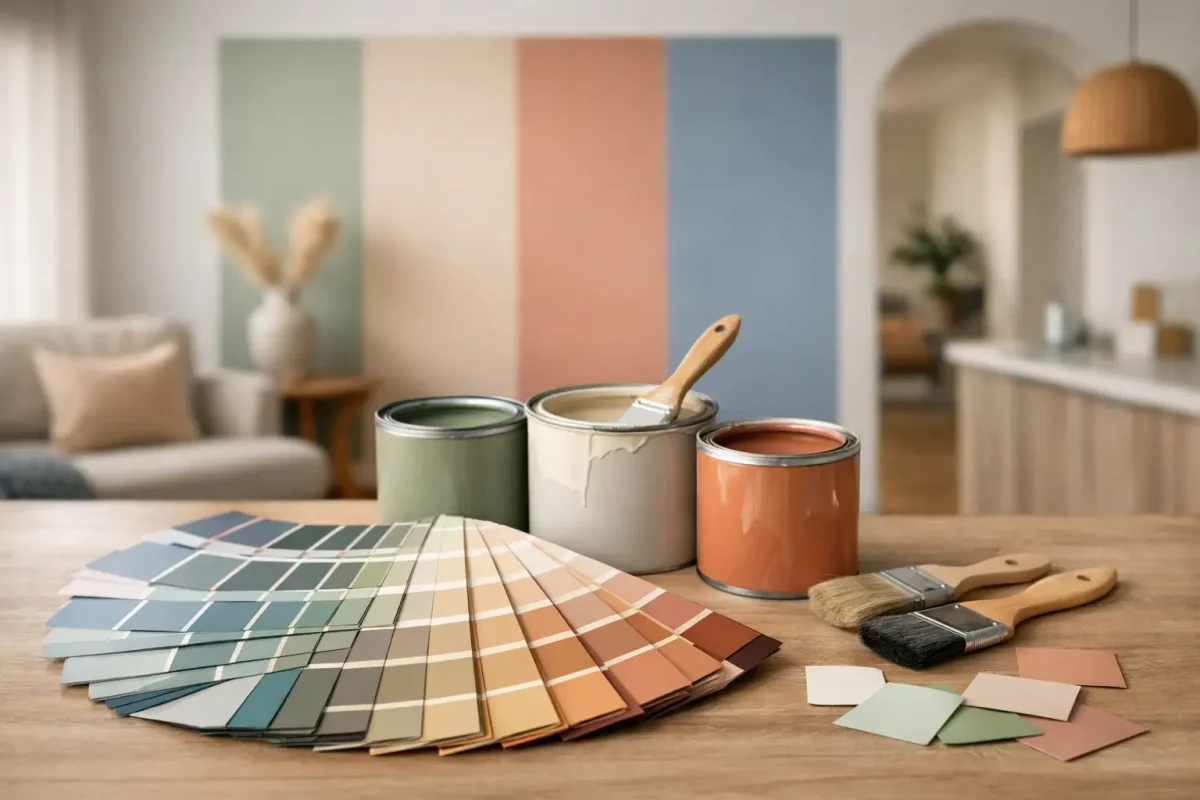
If your walls still carry that cool grey from five or ten years ago, 2026 is the point where it starts to look tired rather than safe. Interior house paint colours 2026 are moving in a warmer, more practical direction – tones that feel settled, liveable and easier to maintain across homes, rentals and commercial interiors.
This shift is not just about fashion. Property owners are choosing colours that support presentation, longevity and day-to-day use. For a family home, that might mean a softer neutral that feels calm without looking flat. For a tenancy, office or common area, it usually means a finish that looks clean under mixed lighting and still presents well after regular wear.
What interior house paint colours 2026 are moving towards
The strongest trend is warmth with restraint. Not orange, not yellow, and not anything overly decorative. Think chalky stone, warm off-white, muted olive, clay-based beige and softened taupe. These colours take the edge off stark interiors and make rooms feel more finished, particularly where there is a lot of hard flooring, white ceilings or artificial lighting.
In practical terms, this makes sense. Very cool whites and greys can emphasise shadows, highlight surface imperfections and create a harsher look in south-facing rooms or spaces with limited natural light. Warmer neutrals tend to be more forgiving. They also work more consistently across open-plan layouts where one colour needs to carry through several adjoining areas.
Greens remain strong, but they are becoming quieter. The brighter sage phase is settling into more grounded shades – dusty eucalyptus, grey-green and olive with an earthy base. These tones suit bedrooms, living areas and waiting rooms because they add character without demanding too much attention.
There is also growing confidence around muted browns and clay tones. Used well, they create depth and a more tailored feel. Used badly, they can darken a room quickly. That is where professional selection matters. The same colour card can look balanced in one property and heavy in another depending on light, ceiling height, flooring and trim colour.
The colours likely to date fastest
Not every trend deserves a full-house commitment. Very bright whites, blue-based greys and high-contrast monochrome schemes are already losing favour in many interiors. They can still suit specific properties, especially modern builds with strong natural light, but they are no longer the default safe option they once were.
The same goes for bold feature walls in saturated navy, emerald or charcoal. In the right setting, they can still work. In most everyday residential and commercial spaces, they now risk making the room feel smaller or more dated than intended. A more current approach is to build interest through softer tonal contrast rather than a single dramatic wall.
Best paint colour directions by room
Living areas are leaning towards warm, flexible neutrals. Soft putty, light mushroom and creamy off-white give enough warmth to feel inviting while still leaving room for different furnishings and flooring. These shades are especially useful in homes that may be restyled over time or properties prepared for sale.
Bedrooms are becoming slightly deeper and more cocooning. Muted green, warm greige and dusty beige all work well because they support a quieter atmosphere without making the room feel enclosed. Where a bedroom is small, keeping the colour soft and pairing it with a low-sheen finish usually gives the best result.
Kitchens are moving away from cold white-on-white. Warmer wall colours sit better with timber joinery, brushed metals and stone-look surfaces. That does not mean dark walls are always the answer. In many kitchens, a restrained warm neutral keeps the space bright while reducing that clinical look.
Bathrooms depend heavily on lighting. A colour that feels clean in daylight can go dull under poor artificial light. Soft whites with a warm base, pale mineral tones and muted sand colours generally perform better than icy whites. They also pair more naturally with tile and vanity finishes that have warmer undertones.
Hallways and circulation spaces benefit from colours that carry light and hide minor scuffs. Mid-light neutrals often do this better than brilliant white. In higher-traffic settings, practical presentation should lead the decision, not just trend appeal.
Interior house paint colours 2026 for commercial and shared spaces
For commercial properties, strata buildings and managed facilities, colour selection has to do more than look current. It needs to support presentation standards, reduce visible wear and fit the building’s use. That is why many of the 2026 colour trends are useful from an operational point of view, not just a design one.
Warm neutrals are effective in reception areas, corridors, offices and common spaces because they create a cleaner, more professional backdrop than colder tones that can look sterile. Muted greens can work well in wellness, education and hospitality settings where a calmer environment matters. Earthier mid-tones are also practical in back-of-house areas where marks and abrasion are more likely.
There is always a balance to strike. Darker shades may reduce the visibility of scuffs, but they can also show dust, patching and uneven preparation more clearly. Very pale colours brighten a space, but they often need more regular maintenance to keep them looking sharp. The right choice depends on traffic, cleaning routines, lighting and how critical first impressions are in that part of the property.
How to choose the right colour without rework
The safest approach is not choosing the safest colour. It is choosing a colour that suits the property properly.
Start with fixed finishes. Flooring, tiles, benchtops, cabinetry and window treatments all influence whether a paint colour reads warm, cool, flat or muddy. A wall colour that looks excellent in isolation can clash once it sits next to pink-toned tiles or grey timber flooring.
Then assess the lighting honestly. Perth properties often have strong natural light, but not every room receives it evenly throughout the day. West-facing rooms can intensify warm tones. South-facing rooms can flatten them. Commercial interiors with LED lighting can shift undertones in ways people do not expect until the paint is on the wall.
Test larger samples than you think you need. Small swatches are not enough for decision-making on whole walls or open-plan spaces. View them in the morning, afternoon and evening. If the colour changes too much during the day, it may not the right fit.
Most importantly, consider how long the scheme needs to last. A private home allows more personality. A rental, office suite or strata common area usually needs broader appeal and lower maintenance. That does not mean bland. It means being selective.
Finish matters as much as colour
A good colour can still disappoint if the sheen level is wrong. Flat or matt finishes soften surface variation and give a more contemporary look, but they are not always ideal in high-touch areas. Low-sheen is often the better middle ground for living spaces, corridors and commercial interiors because it offers a refined appearance with more cleanability.
In kitchens, bathrooms and busy shared areas, higher-performance coatings may be the better call depending on moisture, hygiene and wear. This is where practical advice matters. The best-looking result is not just about the shade on the sample card. It is about how that coating performs once the room is back in use.
Preparation matters just as much. Warm neutrals and earthy colours can be very flattering, but they will not hide poor patching, flashing or inconsistent application. If the aim is a professional finish that lasts, the substrate and the system need to be right from the start.
What this means for your next repaint
The strongest interior palettes for 2026 are not trying to impress for five minutes. They are being chosen to work harder over time. That suits both residential owners wanting a home that feels current without being trendy, and property managers who need a finish that presents well, wears well and does not create unnecessary maintenance issues.
If you are repainting this year, treat colour selection as part of the job planning, not an afterthought at the end. The right scheme can lift tired interiors, support leasing or resale presentation and reduce the risk of repainting again sooner than you should. WADECO sees this regularly across homes, common areas and commercial fit-outs – the best results usually come from choices that balance style with the realities of the space.
A good paint colour should still look right once the furniture is back, the lights are on and the room is being used properly. That is the standard worth aiming for.