
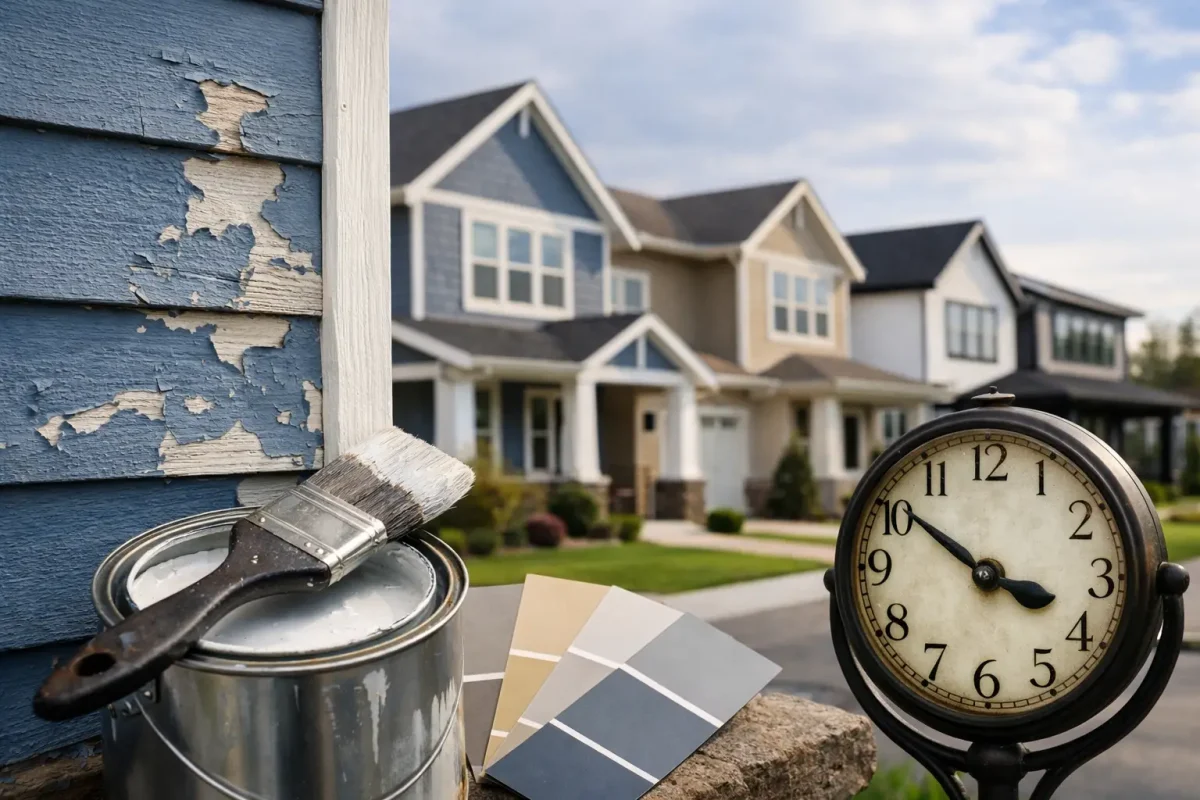
A freshly painted exterior can make a commercial property look well managed overnight. The harder question is how long that result will hold. Exterior building paint lifespan is not set by the calendar alone: it depends on the surface, coating system, preparation standard, exposure and how quickly early defects are addressed.
For Perth property owners and facilities managers, strong UV exposure, heat, wind-driven rain and coastal salt can all place more demand on an exterior finish. A realistic maintenance plan protects presentation, helps avoid substrate damage and gives building managers control over timing and budget rather than forcing a rushed repaint.
How long should exterior paint last?
As a broad guide, a professionally applied exterior coating may perform for five to ten years before a full repaint is needed. Some protected elevations and premium coating systems can last longer, while highly exposed walls, timber features and metalwork may need attention sooner.
These ranges are planning tools, not guarantees. Paint on a shaded rear elevation of an office building has a very different working life from paint on a west-facing façade exposed to afternoon sun. Likewise, a coating applied to sound, properly prepared masonry will usually outperform one applied over chalking paint, damp areas or failed sealant.
For commercial sites, it is often more practical to think in terms of staged maintenance. High-visibility entry points, sun-exposed elevations, balustrades and steelwork can be inspected and refreshed before the wider building requires a complete repaint. This keeps the property presentable while spreading disruption and cost sensibly.
What affects exterior building paint lifespan?
The coating itself matters, but most premature paint failure starts below the topcoat. A quality paint system cannot compensate for unstable surfaces, water ingress or poor preparation.
Surface material and condition
Masonry, rendered walls, fibre cement, timber and metal each move, absorb moisture and weather differently. Timber expands and contracts with changes in temperature and moisture, so cracked joints, failed putty and exposed end grain need careful treatment. Metal requires corrosion to be removed and an appropriate primer to prevent rust returning beneath the finish.
On masonry and render, hairline cracking, powdery surfaces and areas affected by moisture need to be dealt with before painting begins. Simply coating over them may improve appearance temporarily, but it can trap the underlying problem and shorten the service life of the new paint.
Sun, weather and salt exposure
Perth’s sunlight can cause gradual fading and breakdown of paint binders, particularly on dark colours and exposed elevations. Heat also places stress on joints and substrates. Near the coast, airborne salt can accelerate corrosion on metal components and affect paint adhesion if surfaces are not cleaned properly.
Rain is not always the main concern. Water entering through failed flashings, gutters, cracks or sealant joints can cause blistering, peeling and staining from behind the paint film. When this occurs, repainting alone is not the answer. The source of moisture must be identified and rectified first.
Preparation and application
Preparation is where a paint job earns its lifespan. This includes washing contaminants from the surface, removing loose and flaking material, treating mould where required, repairing defects, sanding, priming and allowing adequate drying time between coats.
Application conditions are equally relevant. Paint applied in unsuitable heat, on damp surfaces or without the specified film thickness may look acceptable at handover but fail early. Professional painting teams follow the coating manufacturer’s requirements while working around access, site safety and operational constraints.
Product selection
Exterior coatings should be selected for the substrate and local exposure, not simply by colour chart or price. A breathable masonry system, an elastomeric coating for suitable cracked render, or a corrosion-protection system for steel may be required depending on the condition of the building.
Higher-grade products can offer better UV resistance, flexibility and washability, but they are only worthwhile when the specification and preparation suit the surface. The most expensive coating is poor value if it is applied over an unresolved substrate issue.
Signs your exterior needs maintenance sooner
A building does not need to look severely neglected before it needs attention. Early intervention is usually quicker, less disruptive and more cost-effective than waiting for widespread failure.
Look for fading that makes one elevation noticeably different from another, chalking paint that leaves a powdery residue on your hand, peeling edges, blistering, cracked caulk or rust staining around fixings. Mould, persistent staining and soft or damaged timber also warrant investigation.
For strata and commercial properties, presentation is only part of the issue. Failing coatings can allow water and contaminants to reach the substrate, leading to more involved repairs. Deteriorated paint around windows, doors, rooflines and service penetrations should be assessed promptly because these areas often indicate failed seals or water-management issues.
A practical exterior paint maintenance schedule
A full repaint should not be the only point at which the exterior is inspected. A simple planned approach helps managers identify small issues before they become a larger refurbishment project.
At least once a year, inspect accessible elevations, trims, metalwork and high-exposure areas. Check after severe weather, particularly where the building has mature trees, ageing gutters or known drainage concerns. Keep gutters and downpipes clear, wash away salt and grime where appropriate, and arrange repairs to leaking plumbing, roof components, sealant joints or damaged cladding without delay.
Every two to four years, consider a more detailed condition review for commercial buildings and strata complexes. This is a useful time to assess coating condition, review repairs, identify areas for touch-up or spot treatment, and plan future works around tenancy, access and budget requirements.
The right interval depends on the site. A coastal property, a building with dark external colours, or a busy site exposed to vehicle fumes and dust may benefit from more frequent cleaning and inspections. A sheltered property with a lighter-coloured, well-maintained coating system may require less intervention.
Planning a repaint with minimal disruption
Exterior works are easier to manage when scope is clear before scaffolding, elevated work platforms or trade access are arranged. A proper assessment should identify surface repairs, access requirements, protection for landscaping and vehicles, expected drying times, safety controls and any complementary trade work needed before painting can begin.
This matters especially for occupied commercial properties. A repaint may involve damaged timber, failed sealant, corroded metal, cracked render or minor carpentry repairs. Coordinating these elements through a single point of contact reduces the risk of one trade completing work that another trade then has to disturb.
Colour selection also deserves practical consideration. Dark colours can absorb more heat, while highly saturated colours may show fading more readily on exposed elevations. The right choice should balance the building’s appearance, maintenance expectations and the coating manufacturer’s recommendations for the substrate.
When repainting is the right decision
Touch-ups work well for isolated scuffs or small, sound repairs where the existing coating can be matched. They are less effective when fading, chalking or adhesion failure is widespread. In those cases, patching can create an uneven finish and delay the work that is actually required.
A full repaint is generally appropriate when multiple elevations show deterioration, the existing coating system is breaking down, or the building is undergoing a broader refurbishment. It is also an opportunity to correct past repair issues and establish a coating specification suited to the property’s exposure.
WADECO approaches exterior painting as part of the property’s wider maintenance picture. Where repairs or other trades are needed, coordinating the work properly before the final coating is applied helps deliver a finish that looks professional and is built to last.
The best time to plan exterior painting is while the existing coating is still doing its job, not after water ingress, corrosion or widespread peeling has set the programme. A timely condition assessment gives you clearer options, better scheduling and a finish that continues to represent your property well.






2 Comments
[…] approach may be appropriate in selected areas. For an actively managed commercial asset, however, premature failure can cost more in disruption and repeat works than the saving made at tender […]
[…] is a protective finish with a maintenance life, not a permanent solution. Small cracks, failed sealant and localised peeling are much easier and […]