
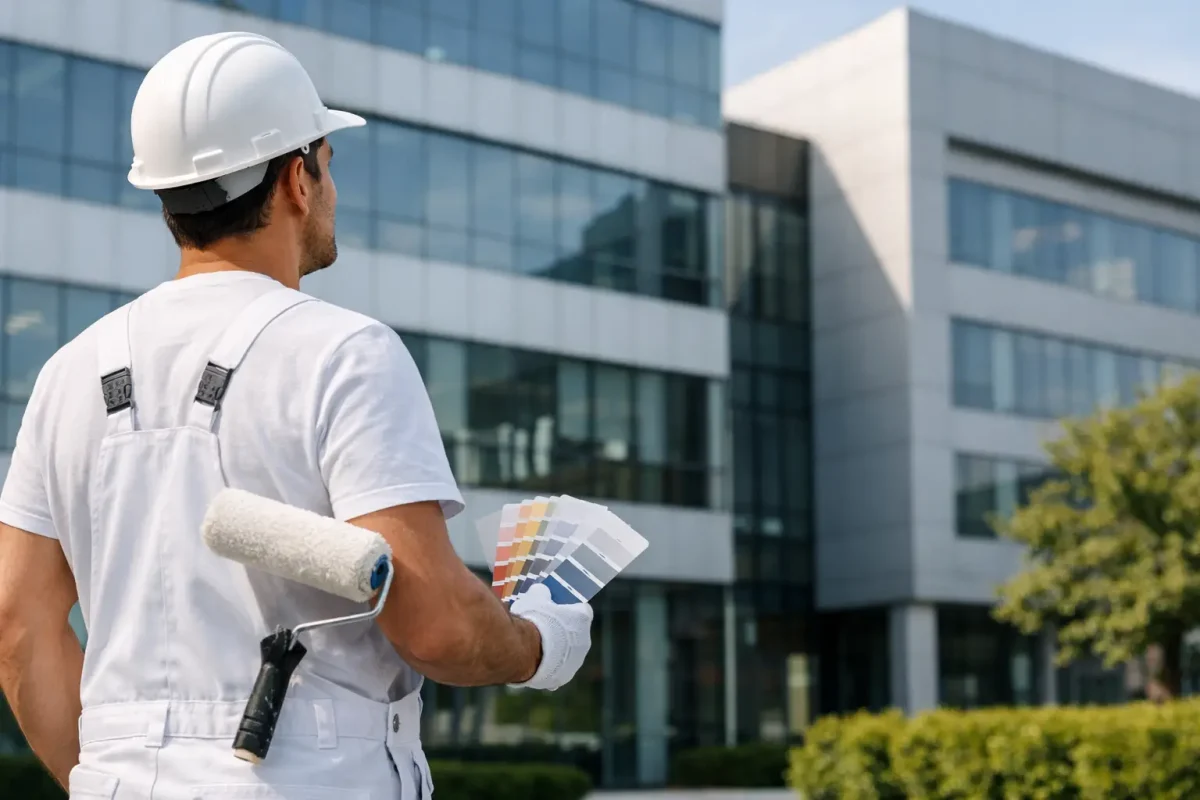
If you are budgeting for a repaint across an office, strata complex, retail site or industrial facility, one question matters early: how long does commercial painting last? The honest answer is that it depends on the surface, the coating system, the preparation, and how hard the building works day to day. A well-managed commercial paint job can last for years, but a poorly specified one can start failing far sooner than expected.
That matters because repainting is not just about appearance. In commercial settings, paint helps protect substrates, maintain presentation standards, support tenant satisfaction and reduce the risk of more expensive remedial work later. Leave it too long, and what starts as cosmetic wear can become a maintenance problem.
How long does commercial painting last in practice?
As a general guide, interior commercial painting often lasts around 5 to 10 years, while exterior commercial painting is more commonly in the 5 to 8 year range. Specialist protective coatings can last longer, but only when the right system has been used for the environment and the substrate has been prepared properly.
Those ranges are useful for planning, but they are not fixed rules. A low-traffic corporate office with controlled air conditioning and little physical wear may stay in good condition well beyond the average. A school corridor, hospitality venue, warehouse, coastal façade or plant room can age much faster.
This is where many property owners get caught out. They assume paint life is mostly about the product brand. In reality, the biggest influences are usually exposure, preparation and maintenance.
What affects how long commercial painting lasts?
Surface preparation
Preparation is the foundation of lifespan. If existing coatings are unstable, surfaces are chalking, cracks are left untreated or moisture issues are ignored, even a premium paint system can fail early. Peeling, blistering and patchy adhesion usually point back to preparation problems rather than the topcoat itself.
Commercial properties often have added complexity here. You may be dealing with old patch repairs, stains, weathered render, rusting steel, damaged plasterboard or surfaces previously coated with incompatible products. Getting the preparation right takes time, but it is what gives the finish a chance to perform.
Interior or exterior exposure
Interior surfaces generally last longer because they are protected from UV, rain and temperature swings. Even so, internal areas are not all equal. Lift lobbies, stairwells, toilets, school rooms and medical settings take much more punishment than a private office or meeting room.
Exteriors face harsher conditions from day one. In Perth and across Western Australia, strong sun, heat, wind-driven dust and coastal salt can all shorten coating life. North- and west-facing elevations often weather faster than shaded sides of the same building.
Traffic and use
A paint finish in a boardroom and a paint finish in a loading bay may be applied in the same month, but they do not age at the same pace. Frequent cleaning, trolley impacts, hand marks, abrasion and chemicals all reduce lifespan.
This is why commercial painting should be specified around use, not just colour and sheen. A finish that looks good on handover but is wrong for the way the space is used can become a false economy.
Product and system selection
Not every commercial job needs a heavy-duty coating system. At the same time, standard decorative paint is not enough for every environment. Kitchens, amenities, healthcare spaces, factories and external steelwork often need systems designed for washability, moisture resistance, corrosion control or chemical exposure.
A better coating system may cost more upfront, but it can reduce disruption and repaint frequency over time. The trade-off is that over-specifying every area can waste budget where a standard commercial-grade finish would have done the job perfectly well.
Application quality
Even the right specification can underperform if the application is rushed. Incorrect film thickness, poor drying conditions, inadequate curing time or coating over damp surfaces can all affect service life.
In occupied commercial environments, timing matters as much as technique. Works often need to be staged carefully around staff, tenants, customers or residents. Good project management helps protect both the finish and the building’s operations.
Typical lifespan by commercial area
Indoor office walls in moderate-use areas often hold up well for 7 to 10 years, though touch-ups may be needed sooner in reception areas and corridors. Ceilings can last longer if there are no moisture or staining issues.
Retail and hospitality interiors usually need repainting more frequently, often within 3 to 7 years, because presentation standards are higher and wear is more visible. In these spaces, repainting is often driven by image as much as material failure.
Strata common areas sit somewhere in the middle. Hallways, foyers and stairwells can look tired long before the coating has technically failed. For many strata properties, repaint timing is about maintaining a consistent standard rather than waiting for obvious breakdown.
Exterior masonry and render might perform for 5 to 8 years in reasonable conditions, though exposed elevations may need attention sooner. Exterior timber can require more regular maintenance, particularly where movement, moisture or direct sun exposure are involved. Steelwork lifespan varies widely depending on corrosion risk and whether the correct protective system was applied.
Signs it is time to repaint before failure sets in
Waiting until paint is peeling badly is rarely the best approach. Commercial repainting is easier and more cost-effective when handled before major deterioration sets in.
Early warning signs include fading, chalking, scuffing that no longer cleans off, patchy repairs, mould staining, blistering, cracking and visible loss of gloss or finish consistency. On exteriors, rust bleed, flaking and water ingress around failed areas should be treated seriously.
There is also a presentation threshold to consider. In many commercial properties, the coating may still be technically intact but no longer reflects the standard expected by tenants, customers or staff. If the building looks dated, neglected or inconsistent, repainting can be justified well before the substrate is at risk.
Why some commercial paint jobs fail too soon
Most premature failures come back to one of four issues: poor preparation, the wrong coating system, moisture problems, or low-quality application. Sometimes the problem is a combination of all four.
Another common issue is treating repainting as a stand-alone task when other defects are already present. If cracks, substrate movement, water entry, failed sealants or damaged plaster are not addressed first, the new paint is being asked to cover a maintenance issue it cannot solve.
That is where a coordinated approach helps. On many sites, painting works are tied to patch repairs, carpentry, plastering or other remedial items. Handling those together reduces rework and gives the new finish a better chance of lasting.
How to make commercial painting last longer
The first step is proper assessment. Before pricing or scheduling a repaint, it helps to understand what is failing, why it is failing and what level of finish the property actually needs. A warehouse office, premium retail frontage and school amenities block should not all be treated the same way.
The second is choosing a specification that matches the building’s use and exposure. That may mean washable low-sheen systems internally, anti-graffiti finishes in vulnerable areas or protective coatings for external steel and high-risk substrates. Spending carefully in the right places usually delivers better value than trying to apply one paint system across the entire site.
The third is maintenance. Routine washing of external surfaces, prompt treatment of leaks, and early repair of damaged areas can add years to a coating’s service life. Small defects left unattended tend to spread, especially outdoors.
Finally, plan repainting cycles before failure rather than after it. For larger properties, staged maintenance programmes are often more practical than waiting for a full-site overhaul. They spread cost, reduce disruption and keep the property in a consistently presentable condition.
A better question than lifespan alone
When clients ask how long does commercial painting last, the more useful question is often this: how long should it last in this building, under these conditions, with this level of wear? That is the point where good advice becomes more valuable than a generic number.
A dependable contractor will look at the building as a whole – not just the paint tins required. That includes surfaces, exposure, defects, access, timing and whether other trades need to be coordinated first. For clients managing live commercial environments, that practical planning is just as important as the finish itself.
If you are assessing a repaint, the best time to act is when the building starts showing wear, not when the damage is obvious to everyone who walks through the door. Done properly, commercial painting should protect the asset, support presentation and buy you years of reliable performance with less disruption along the way.



2 Comments
[…] a broad guide, a professionally applied exterior coating may perform for five to ten years before a full repaint is needed. Some protected elevations and premium coating systems can last […]
[…] consider access and operational consequences. A coating that offers a longer service life may be the better commercial decision if future access requires scaffolding, elevated work […]