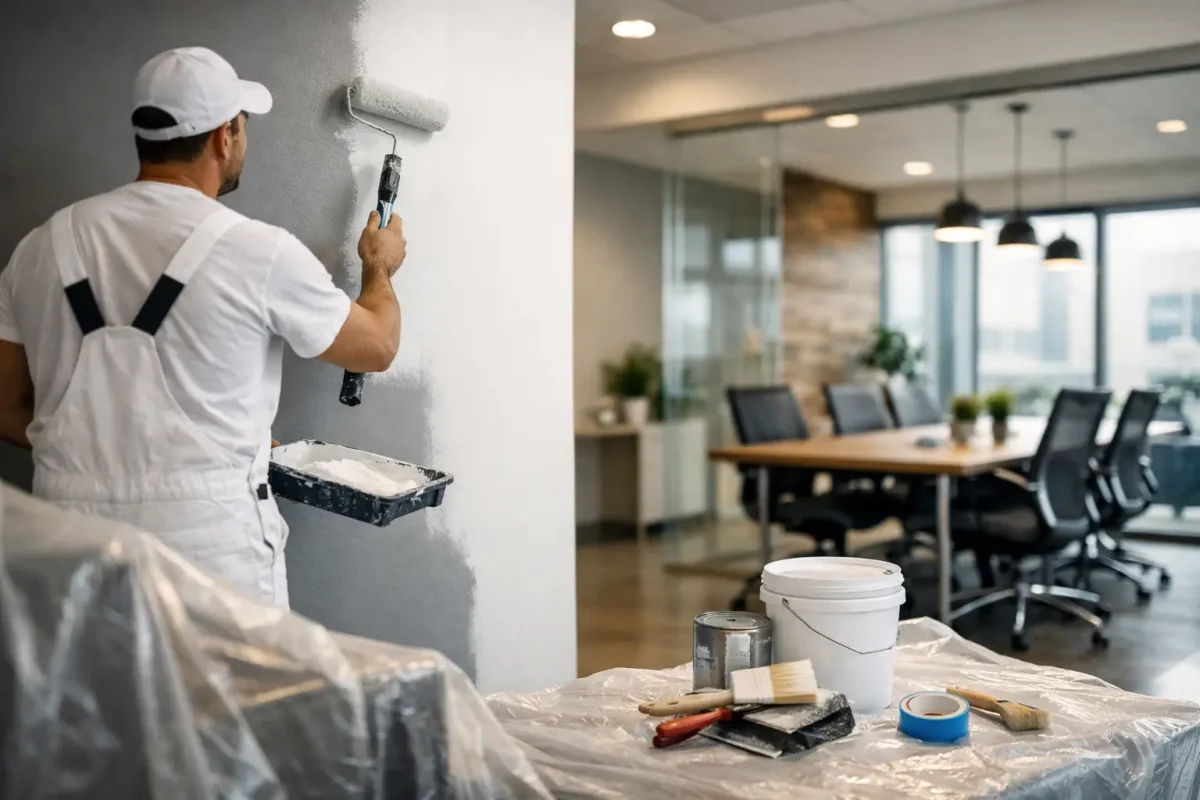
A tired reception wall, scuffed corridors or uneven paintwork can change how customers, tenants and staff view a business before a conversation begins. Interior painting for business premises is not simply a cosmetic job. Done properly, it protects high-use surfaces, supports a clean and professional environment, and can be planned around the way your building actually operates.
Why commercial interiors need a different approach
Business premises have different pressures from a typical home. Entrances, stairwells, amenities, kitchens, meeting rooms and shared corridors experience regular wear. Marks from bags, trolleys, furniture and foot traffic build up quickly, particularly in education, healthcare, retail, strata and office settings.
The work also needs to fit around people. A contractor may need to paint outside trading hours, work in stages around occupied areas, protect furniture and equipment, control dust, and keep access routes clear. If a wall repair, electrical adjustment or plumbing repair is also needed, coordinating each trade separately can turn a straightforward repaint into a drawn-out maintenance issue.
A well-managed painting project considers the finish and the operational detail from the start. That means clear access arrangements, a realistic programme, suitable products, careful preparation and a responsible handover when the work is complete.
Planning interior painting for business premises
The best outcomes are decided before the first surface is sanded. A site inspection should identify more than the rooms that need a fresh coat. It should establish the condition of the existing substrate, areas with moisture damage, failed coatings, cracks, dents, staining and any repairs that may be required before painting can begin.
Start with the purpose of each space
Paint selection should reflect how a space is used, not just the colour chosen. A quiet boardroom may suit a refined low-sheen finish, while a busy corridor often benefits from a tougher, washable coating that is easier to maintain. Kitchens, amenities and areas exposed to humidity may need products chosen for moisture resistance and cleanability.
Colour also has a practical role. Lighter shades can help enclosed spaces feel brighter, while darker colours may be useful below dado height or in high-contact zones where marks are more visible. Brand colours can be incorporated with restraint, particularly in reception areas, customer-facing spaces and feature walls. The right scheme should look professional without making future touch-ups unnecessarily difficult.
Build the programme around business operations
Painting during normal business hours can be appropriate for low-traffic areas or staged works, but it is not always the right option. In a medical practice, retail premises or busy office, after-hours or weekend work may reduce disruption and protect customer experience. The trade-off is that out-of-hours access requires clear security arrangements, lighting, site contacts and approval for any building access restrictions.
Staging is often the sensible middle ground. Rather than closing an entire workplace, the work can move through one room, floor or section at a time. This keeps essential areas operating, provided staff know which spaces are unavailable and when they will be returned to use.
A clear scope should set out surface preparation, repair requirements, paint systems, colours, work hours, protection measures and completion expectations. It reduces misunderstandings and makes it easier to manage changes if concealed damage is found once work starts.
Choose paint systems for durability, not just appearance
Not all interior coatings perform the same way. Lower-cost paint can appear acceptable on day one but may scuff easily, show patch repairs or lose its finish after repeated cleaning. For commercial property managers, the real cost is not only the initial application. It is how often the surface needs attention afterwards.
The appropriate system depends on the existing coating, the substrate and the level of use. Plasterboard, rendered walls, timber trims, steel door frames and previously painted masonry may all require different preparation or primers. Painting over an unstable or contaminated surface without addressing the cause can lead to peeling, staining or premature failure.
Sheen level matters as well. Higher-sheen finishes are generally easier to wipe down, but they can highlight poor substrate condition and surface imperfections. Lower-sheen paints are more forgiving visually, although they may be less suitable for areas that need frequent cleaning. There is no one-size-fits-all answer. The right choice balances presentation, maintenance needs and the condition of the building.
Preparation is where the quality is built
A durable finish relies on the work beneath it. Cleaning, scraping loose material, filling damage, sanding, sealing stains and priming repaired surfaces are not optional extras. They are the steps that allow the top coats to bond properly and look consistent.
Commercial interiors commonly reveal maintenance issues once furniture is moved and walls are inspected closely. Old picture-hook holes, impact damage around doorways, water marks below windows, cracked cornices and failed sealant can all affect the final result. Addressing these items as part of the painting scope is more efficient than applying paint first and arranging repairs later.
Protection is equally important. Floors, desks, shelving, IT equipment and fittings should be covered or moved in an organised way. Dust control and daily clean-up help maintain a safe, usable site, especially where teams are continuing to work nearby.
Use one point of contact when multiple trades are involved
Painting work often exposes related issues. A damaged wall may need plastering before it can be coated. A leaking pipe may need repair before water staining is treated. Loose skirting, damaged doors, broken tiles or faulty light fittings can undermine the appearance of an otherwise refreshed space.
Managing each issue through separate contractors creates more calls, more site visits and more opportunities for delays. A multi-trade contractor can coordinate the required repairs alongside painting, providing one point of contact and a clearer programme for the property manager or business owner.
For Perth and wider Western Australian sites, WADECO – MTMS can manage interior painting, repair works and complementary trades as part of a single planned project. This approach is particularly useful for refurbishments, end-of-lease works, strata common areas and maintenance backlogs where several small issues need to be resolved properly at the same time.
Keep safety, communication and access under control
A professional painting contractor should work with clear site procedures. This includes identifying hazards, maintaining safe access, managing work areas and keeping occupants informed. In occupied premises, communication is often as valuable as the paintwork itself.
Staff and tenants need practical information: which areas are being worked on, whether access will change, when odours may be present and who to contact if an issue arises. For buildings with public access, clear barriers and signage help prevent people entering active work zones.
Ventilation and drying times should also be factored into the programme. Even low-odour products need suitable conditions to cure as intended. Rushing rooms back into service too early can risk scuffs, marks and avoidable rework.
What to check before signing off the work
Final inspection should not be treated as a formality. Walk the completed areas in normal lighting and inspect walls, ceilings, trims, doors and repaired sections from the same viewing distance occupants will use. Check that colours are consistent, cut lines are neat, fittings have been reinstated and floors or furniture are clean.
It is also worth confirming that touch-up paint details, colour references and maintenance recommendations have been recorded for future use. This makes small repairs simpler and helps maintain a consistent appearance when the next stage of works is planned.
A quality interior repaint should make the workplace look cared for without creating unnecessary downtime or follow-up problems. With a detailed scope, durable coating system and coordinated delivery, painting becomes a practical investment in the condition, presentation and day-to-day function of the property.