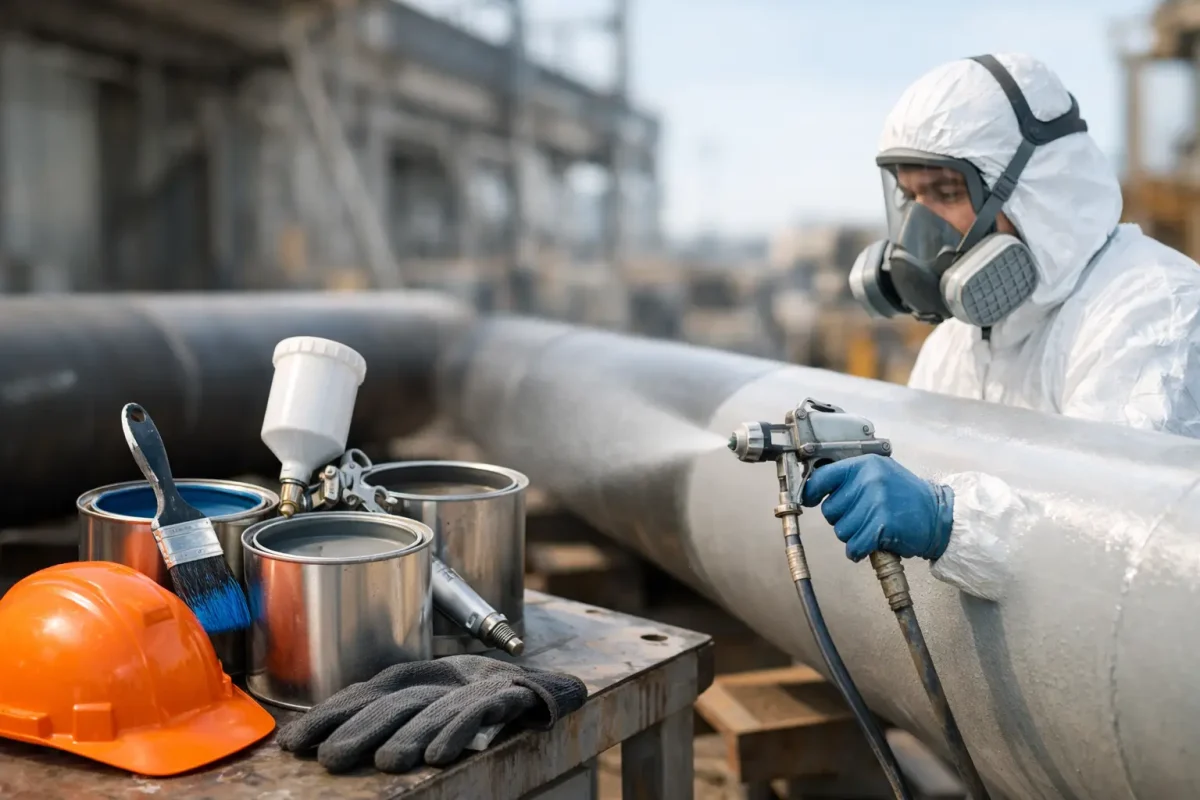
A coating failure rarely starts with the final coat. It usually starts much earlier, when a specification is based on appearance alone, an assumed surface condition or a product selected without considering the environment. Knowing how to specify protective coatings properly helps property managers, facilities teams and owners protect building assets, control maintenance costs and avoid disruptive rework.
The right system is not simply the toughest or most expensive paint available. It is the system that suits the substrate, the exposure conditions, the building’s use and the planned maintenance programme. A clear specification also gives contractors a defined standard to work to, making quality easier to manage from preparation through to handover.
Start with the asset, not the coating
Before selecting a product, identify exactly what needs protection and what is causing it to deteriorate. A steel handrail exposed to coastal air has different requirements from concrete in a car park, a warehouse floor subject to forklift traffic or internal walls in a high-use healthcare or education setting.
Consider the material itself. Common substrates include structural steel, galvanised steel, aluminium, concrete, masonry, timber and previously painted surfaces. Each has different preparation requirements and different risks. For example, coatings may struggle to adhere to poorly prepared galvanised steel, while concrete can retain moisture or contain contaminants that affect a floor coating system.
The asset’s function matters as much as its material. A plant room floor may need chemical resistance and a finish that supports safe cleaning. External balustrades may need UV stability, corrosion control and a finish that remains presentable for tenants and visitors. Internal service corridors may need a washable, scuff-resistant coating that can be touched up without shutting down daily operations.
A useful specification states the location, substrate, current condition and intended service. That information prevents a generic product recommendation from becoming an expensive mismatch.
Assess the exposure conditions honestly
Protective coatings are specified for the conditions they will face, not the conditions present on the day they are applied. Exposure should be assessed over the asset’s working life.
For external areas, consider sunlight, rain, temperature changes, standing water, wind-driven dust and airborne pollutants. In coastal parts of Western Australia, salt exposure can accelerate corrosion on steelwork, gates, balustrades and other metal assets. Sheltered locations can still be high risk where salt, moisture or poor drainage are present.
For internal environments, look beyond whether an area is technically indoors. Kitchens, amenities, laundries, workshops, loading areas and plant rooms may experience humidity, cleaning chemicals, abrasion, impact or regular condensation. Commercial floors can face tyre traffic, pallet movement, oil spills and point loads. These factors influence whether a standard decorative coating is adequate or whether a specialist system is required.
Also consider access and operational consequences. A coating that offers a longer service life may be the better commercial decision if future access requires scaffolding, elevated work platforms, shutdowns or tenant coordination. Conversely, an over-specified system can add unnecessary cost and longer cure times where a simpler maintenance coating would perform well.
How to specify protective coatings by system
A proper coating specification should describe a complete system, rather than naming a topcoat and leaving the rest to interpretation. The system normally includes surface preparation, primer or sealer, intermediate coats where required, finish coats and the required dry film thickness.
Surface preparation is often the deciding factor in coating performance. Rust, chalking, salts, grease, mould, loose paint and dust must be addressed before coating begins. Steel may require mechanical preparation or abrasive blasting, depending on the condition and system. Masonry and concrete may need cleaning, repairs, removal of failed paint and moisture assessment. Previously coated surfaces need adhesion checks to establish whether they can be prepared and recoated or whether full removal is necessary.
Specify preparation standards in practical terms. Rather than writing “prepare as required”, state the expected condition of the finished surface and the method where it is critical. This gives the contractor a measurable requirement and helps avoid disputes once work has started.
The primer must suit both the substrate and the exposure. An anti-corrosive primer for steel, for example, serves a different purpose from a penetrating sealer for porous masonry. Intermediate coats can build film thickness and improve barrier protection, while the finish coat provides colour, gloss level, weathering performance and cleanability.
Dry film thickness should be included where corrosion protection, chemical resistance or heavy-duty performance is required. Too little film may leave the system under-protected. Too much can create drying, curing or adhesion issues. The target thickness should reflect the selected product system and the conditions it is designed to withstand.
Specify finish requirements that suit the building
Colour and gloss are not just presentation choices. They affect cleaning, visibility of marks, heat absorption and the way a space is perceived. A high-gloss finish can be easy to clean but may show surface imperfections. A lower-sheen finish can be more forgiving on broad internal walls, though it may not suit areas requiring frequent aggressive cleaning.
For commercial properties, finish selection should account for how the area is used. Reception areas, common corridors and tenancy frontages often need a professional decorative finish as well as durability. Service areas may prioritise cleanability, safety markings or resistance to damage. Floors and stairwells may need slip-resistance, but the level must be selected carefully. An overly textured finish can become difficult to clean and retain dirt.
Where colour matching or corporate presentation matters, record the chosen colour reference, sheen level and any sample approval requirements. For refurbishment work, test patches are particularly useful where existing surfaces, lighting and surrounding finishes can affect the final appearance.
Build inspection and quality control into the scope
The best coating system can still fail if it is applied over unsuitable surfaces or under poor site conditions. A specification should set out when inspections are required, particularly before coating, between coats and at completion.
Pre-application checks may include substrate moisture, surface cleanliness, rust condition, ambient temperature, humidity and dew point where relevant. This is especially important for specialist coatings and external metalwork. Applying a coating to a damp surface, or when condensation is likely, can compromise adhesion even if the finish initially looks acceptable.
During the works, record the products used, batch details where needed, application method, coat sequence and drying times. Wet and dry film thickness checks may be appropriate for protective systems. At completion, inspect for coverage, pinholes, missed edges, runs, damage, adhesion issues and consistency of finish.
For occupied buildings, quality control should sit alongside programme management. The specification should address access, protection of adjacent surfaces, containment of dust, ventilation, work hours and reinstatement. This is where a professionally managed contractor adds value: the technical system and the practical delivery plan must work together.
Allow for repairs, access and future maintenance
A coating specification should not end at practical completion. Ask how the surface will be maintained, cleaned and repaired. Some specialist systems need compatible repair products. Others may be difficult to blend after local damage, particularly in highly visible areas.
Include realistic expectations for inspection intervals and touch-up work. Coatings on exposed steelwork may need routine checks for chips, failed sealants, water traps and early corrosion. Addressing small defects promptly is far more economical than allowing corrosion to spread beneath a coating film.
Where maintenance works involve several issues at once – failed coatings, cracked render, water ingress, damaged timber or corroded fixings – coordinating the related trades is essential. Applying a new coating before underlying defects are repaired only delays the problem. A single point of contact for painting, repairs and complementary trades can keep the work properly sequenced and reduce disruption to occupants.
Avoid vague specifications and false economies
The most common specification mistakes are vague preparation requirements, incompatible products, inadequate film build and ignoring moisture or contamination. Another is selecting a system purely on initial price. A lower-cost coating may be suitable for a low-risk internal area, but it can be poor value on exposed steel, high-traffic floors or hard-to-access façades.
Equally, not every project needs an industrial-grade system. The specification should be proportionate. A dependable contractor will explain where a premium coating system is justified, where it is not, and what maintenance commitment is needed to protect the investment.
Protective coating work is most effective when the decision is based on evidence from the site, not a catalogue description. Get the substrate and exposure right, define the preparation and system clearly, and plan for the building to remain operational while the work is completed. That approach gives the finished coating its best chance of looking right and lasting as intended.