
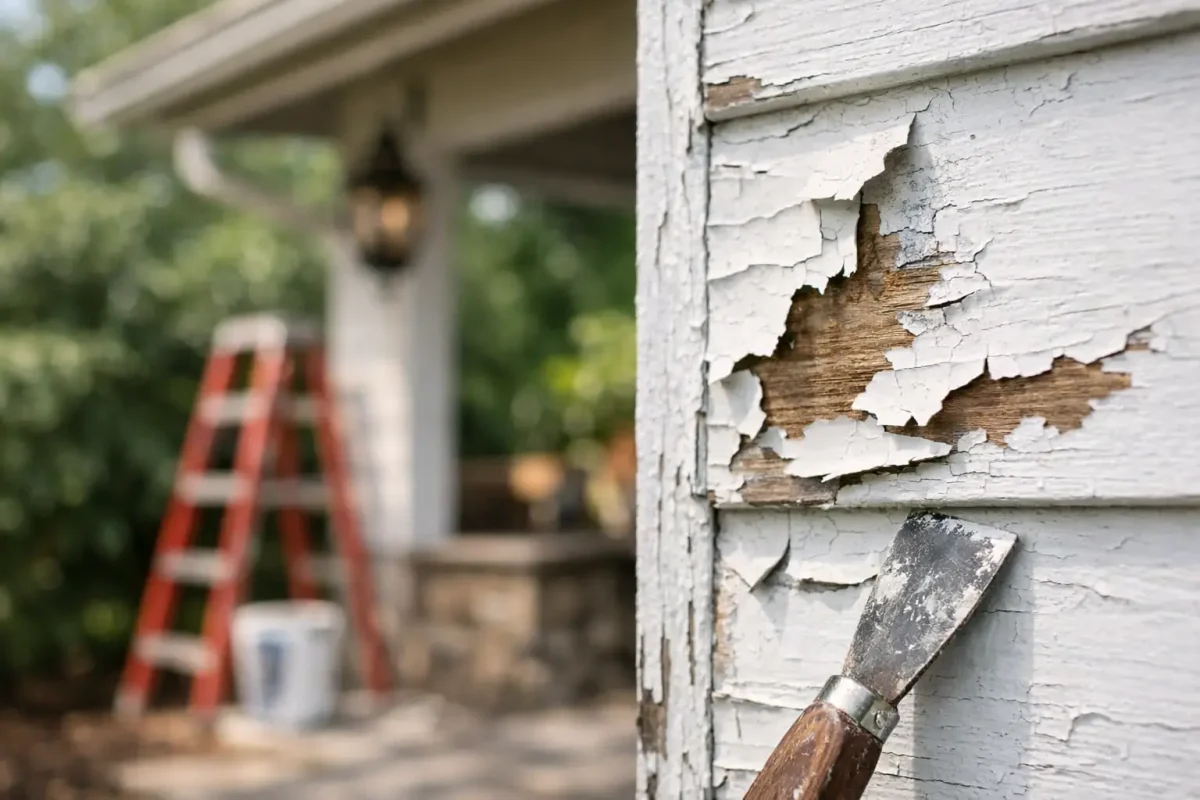
Paint rarely peels outdoors without giving a warning first. Blistering, fine cracking, faded patches and lifting around joints are all signs that the coating system is losing its grip. Understanding what causes paint peeling outdoors helps property owners and facilities managers address the underlying issue rather than repeatedly painting over the same problem.
For commercial buildings, strata properties and homes alike, peeling paint affects more than appearance. It can expose timber, metal, masonry and rendered surfaces to moisture, corrosion and deterioration. The right repair depends on the surface, the existing coating and the reason it failed in the first place.
What causes paint peeling outdoors?
Outdoor paint failure is usually caused by moisture, poor preparation, incompatible products or environmental exposure. In Perth and across Western Australia, strong UV, driving rain, coastal salt and large temperature changes can all shorten the life of an exterior finish when the coating system is not suited to the building.
1. Moisture trapped behind the paint
Moisture is one of the most common reasons paint peels. Water can enter through failed sealant, cracks in render, leaking gutters, damaged flashing, overflowing downpipes or gaps around windows and doors. Once it gets behind a painted surface, moisture breaks the bond between the substrate and the coating. Paint may bubble first, then lift away in sheets or flakes.
This is particularly common on timber fascias, eaves, window frames and external walls near wet areas or roof drainage points. Painting over a damp surface may hide the issue temporarily, but the new coat is likely to fail again.
The solution is to find and correct the source of water ingress before repainting. That may involve plumbing repairs, roof maintenance, carpentry, replacement sealants or patching damaged render. A proper exterior repaint begins with a dry, sound substrate.
2. Poor surface preparation
A quality paint finish depends heavily on preparation. If loose paint, dirt, chalky residue, mould, salt or surface contaminants are left in place, fresh paint has little chance of forming a lasting bond.
Older buildings can carry several layers of previous coatings. Some may be degraded, while others may have been applied without adequate cleaning or sanding. Applying new paint over an unstable base simply transfers the problem to the new coating.
Professional preparation generally includes washing, scraping loose material, sanding edges, treating mould where required, filling defects and applying the right primer. On commercial sites, preparation also needs to be organised around access, safety and minimal disruption to occupants or operations. It is often the least visible part of the job, but it has the greatest effect on durability.
3. Painting in unsuitable weather
Exterior paint needs the right conditions to cure correctly. Painting during rain, high humidity, extreme heat or strong winds can lead to early coating failure. A surface may look dry after rain but still hold enough moisture to affect adhesion, particularly on timber and porous masonry.
High temperatures create a different issue. If paint dries too quickly in direct sun, it may not flow or bond as intended. The surface can form a skin before the coating beneath has cured properly. This can contribute to blistering, cracking and peeling later on.
Timing matters. A competent contractor checks the forecast, surface condition and product requirements before starting. Some work may need to be scheduled for cooler periods of the day, while exposed elevations may need to be completed separately to manage direct sun and wind.
4. Harsh sun and ultraviolet exposure
Western Australian sunlight is hard on exterior coatings. UV radiation gradually breaks down the binders that hold paint together. Colour fades, surfaces become powdery or chalky, and the coating loses flexibility. Eventually, it can crack and peel, especially where the existing paint is already thin or aged.
North- and west-facing walls, metal cladding, garage doors, fencing and timberwork are often the first areas to show damage. Dark colours can be more vulnerable on highly exposed surfaces because they absorb more heat, although the right premium coating system can improve performance.
Not all exterior paints are designed for the same level of exposure. Selecting a product suited to the substrate and local conditions is essential. A low-cost coating may appear acceptable on day one but require earlier maintenance in exposed areas.
5. Incompatible paint or primer systems
Paint is a system, not just a top coat. The primer, undercoat and finish need to work with each other and with the material beneath them. Problems can arise when oil-based paint is applied over unsuitable water-based coatings, when a water-based paint is used over a glossy unprepared surface, or when the wrong primer is selected for metal, timber, masonry or previously painted render.
For example, bare galvanised steel, rusty metal and tannin-rich timber each require specific preparation and primers. Without them, the finish may peel, stain or corrode from underneath. Likewise, a paint product that is suitable for masonry may not be suitable for a flexible timber surface.
When the existing coating is unknown, testing a small area or seeking professional assessment is often worthwhile. It reduces the risk of committing an entire elevation to a coating that will not adhere.
6. Movement in timber, joints and masonry
Buildings move. Timber expands and contracts with changes in temperature and moisture. Metal heats up quickly in the sun. Masonry and render can develop fine cracks as structures settle or as materials respond differently to changing conditions.
Paint has limited ability to bridge movement. Once a coating becomes brittle with age, movement can cause splitting around joins, fasteners, window frames and weatherboards. Water then enters through those breaks and accelerates peeling.
Flexible sealants, appropriate primers and coatings with suitable elasticity can help manage this movement. However, paint should not be used as a substitute for repairing a failed joint, loose board, damaged render or significant crack. The building defect must be dealt with first.
7. Salt, mould and environmental contamination
Coastal properties face added pressure from salt-laden air. Salt residue attracts moisture and can interfere with paint adhesion, particularly on metalwork and exposed walls. Without thorough washing and the correct protective coating, corrosion or peeling may develop sooner than expected.
Mould and algae create a similar problem in shaded, damp locations. They can grow beneath or on top of a coating, weakening the surface and leaving it looking patchy. Simply painting over mould is not a repair. The growth needs to be treated, the area cleaned and the moisture conditions considered.
Busy commercial areas can also accumulate dust, exhaust residue and other airborne contaminants. Routine washing is a practical way to extend the service life of painted external surfaces between major maintenance cycles.
8. Skipping maintenance until failure is widespread
Paint is a protective finish with a maintenance life, not a permanent solution. Small cracks, failed sealant and localised peeling are much easier and more cost-effective to repair than widespread coating breakdown.
Waiting until paint is coming away across entire walls can turn a straightforward repaint into a larger refurbishment project. It may require more extensive scraping, substrate repairs, access equipment and coordination with other trades. For property managers, planned inspections help prevent these issues from becoming disruptive or expensive.
How to repair peeling exterior paint properly
The first step is not choosing a new colour. It is identifying whether the failure is caused by moisture, poor adhesion, UV exposure, corrosion, movement or a combination of factors. This determines the repair scope.
Loose and failed paint should be removed back to a firm edge. The substrate must then be cleaned, allowed to dry and repaired as needed. Any timber rot, rust, cracked render, failed sealant or water entry point should be addressed before primer is applied. Feathering the surrounding paint edges helps the repaired area blend into the existing finish.
The appropriate primer is then selected for the exposed substrate, followed by an exterior top coat designed for the surface and local conditions. On larger properties, it is worth considering the whole elevation rather than only the visible failed patch. Spot repairs can be effective, but only where the surrounding paint remains sound.
When peeling paint needs professional attention
A small area on a garden fence may be manageable for a capable homeowner. Peeling on high façades, commercial premises, heritage surfaces, roofline timber, metal cladding or areas affected by suspected water ingress is different. Access, containment, substrate repair and coating selection all need careful management.
If paint is peeling near windows, gutters, balconies or roof junctions, treat it as a possible maintenance warning rather than a cosmetic issue. A coordinated assessment can identify whether painting alone is enough or whether carpentry, sealing, plumbing or other repairs are needed first. This is where a single point of contact can prevent gaps between trades and repeated rework.
WADECO approaches exterior maintenance with the finish and the building condition in mind, coordinating the necessary repair work before applying a durable coating system. The aim is straightforward: protect the property, maintain presentation standards and avoid avoidable disruption.
A well-maintained exterior does not need constant repainting. Address the first signs of peeling early, correct the cause rather than the symptom, and give the next coating the clean, dry and stable surface it needs to perform.





1 Comment
[…] more facilities teams will move maintenance decisions further forward. Rather than waiting for paint failure to become widespread, they will inspect exposed elevations, high-traffic interiors, wet areas and […]