If you are trying to work out how to match interior house paint, the biggest mistake is assuming the existing wall colour will be easy to copy by eye. In practice, even a slight difference in undertone, sheen or paint age can stand out once the new paint dries. What looks close enough on a sample card can become obvious across a full wall, especially in strong daylight or under office lighting.
That matters whether you are touching up one marked section in a reception area or repainting part of a home after repairs. A poor match can leave the space looking patchy, dated or poorly maintained. A proper match saves time, avoids unnecessary full repaints and helps maintain a consistent standard of presentation.
How to match interior house paint without guesswork
The most reliable way to match paint is to start with the original paint details if they are available. A leftover tin, product label, specification sheet or past invoice can save a great deal of time. The brand, product range, colour name, code and sheen level all matter. Two paints with a similar colour name can still produce noticeably different finishes if the formulation or sheen is not the same.
If those records are not available, the next step is to take a clean sample from the wall. This usually means removing a small piece from an inconspicuous area, such as behind a switch plate, inside a cupboard or near a skirting board where a minor repair is manageable. The sample needs to be large enough for proper scanning or visual comparison. A tiny flake is often not enough to produce an accurate result.
Even then, matching is not always exact. Paint changes over time. Sunlight, cooking residue, cleaning products, smoke, general wear and age can all alter the original appearance. So the target is often not the original fresh paint from years ago, but the paint as it looks now on the wall.
Why paint matching goes wrong
Most mismatches come down to three things: colour shift, sheen difference and unrealistic expectations around touch-ups.
Colour shift is common because wall paint rarely looks the same in every room. South-facing rooms, shaded hallways and commercial interiors with cool LED lighting will all change how a colour reads. A warm white in one area can look cream in another. A pale greige can suddenly show green or pink undertones depending on what sits around it.
Sheen is just as important. If the wall has a low-sheen acrylic and the touch-up is done with a flatter or glossier product, the mismatch will catch the light differently even if the colour is close. This is one of the main reasons people think the paint shop mixed the wrong shade when the issue is actually the finish.
Then there is the condition of the existing wall. If the surface has been patched, washed unevenly or faded in certain sections, no single touch-up area may disappear completely. In those cases, repainting from corner to corner is usually the cleaner solution.
Undertones are the detail that changes everything
When people compare paint colours, they often focus on whether it looks lighter or darker. The more important detail is usually undertone. Whites can lean yellow, blue, grey or green. Beige can carry peach, pink or olive. Grey can shift warm or cool depending on the surrounding materials.
This is why a paint that looks right in the tin can still feel wrong on the wall. Flooring, joinery, furnishings and natural light all affect perception. In residential settings, timber floors and stone benchtops often bring out hidden warmth or coolness. In commercial settings, artificial lighting and large expanses of wall can exaggerate subtle differences.
A practical approach is to compare the sample against nearby fixed finishes, not just against the wall in isolation. If the space includes flooring, cabinetry, tiled areas or feature walls that are staying in place, the matched paint needs to work with those as well.
How to test a paint match properly
A proper test is done on the actual surface, in the actual room, and viewed at different times of day. That sounds simple, but it is where many poor decisions are made.
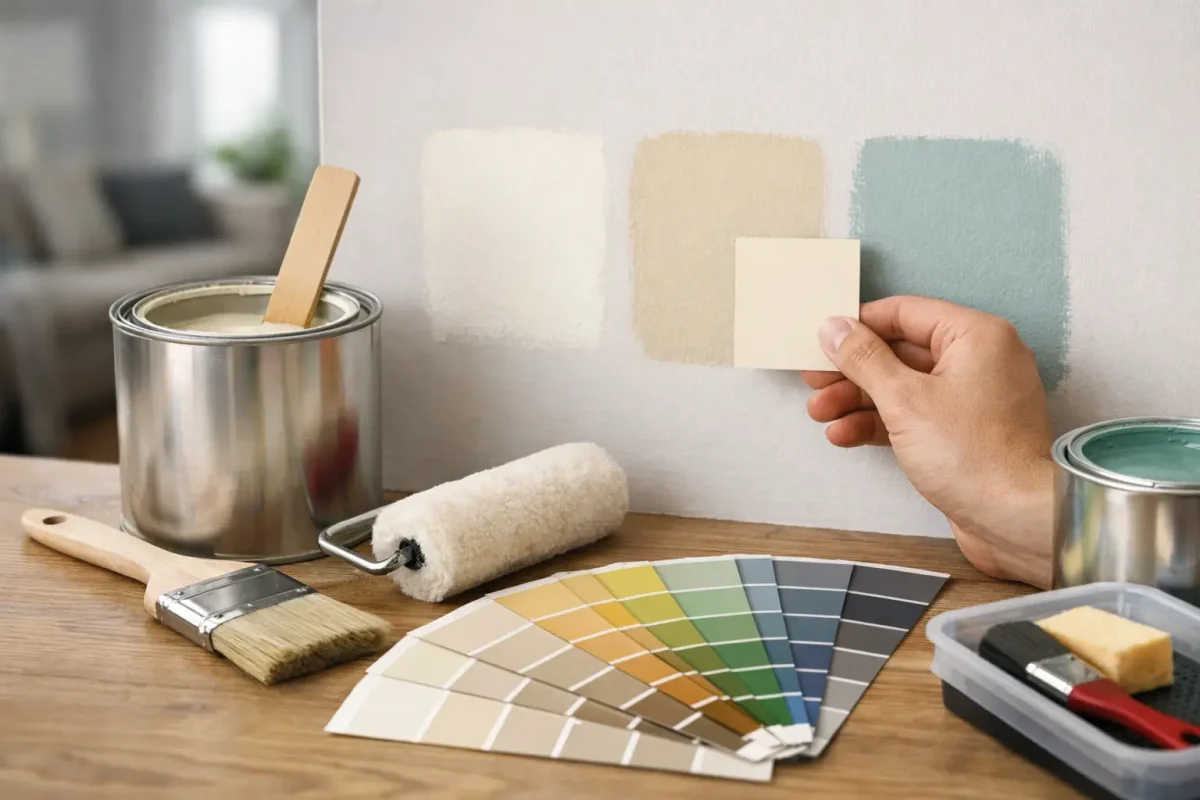
Brush a test area onto the wall and let it dry fully. Wet paint is not a reliable guide. Check it in daylight, evening light and under the room’s regular fittings. Step back and view it from normal standing distance, not just close up. A minor variation that is invisible at arm’s length may be acceptable. One that jumps out from the doorway is not.
If the aim is a touch-up rather than a broader repaint, test the match on a small repaired area first. Some touch-ups blend well once dry. Others flash immediately because the wall has slight texture variation or because the existing paint has aged. If that happens, it is usually more efficient to repaint the whole wall.
Corner-to-corner repainting often gives the better result
This is where experience matters. Clients often ask for the smallest possible repaint to save time and cost. Sometimes that works. Often it creates a visible patch that ends up requiring more work later.
If damage or staining sits in the middle of a wall, repainting that wall from corner to corner is usually the safer option. It contains the new paint within natural visual breaks, gives an even finish and avoids the halo effect that can happen around touch-up areas. In larger commercial spaces, that approach also helps maintain a more professional presentation standard.
Matching old paint in homes and commercial properties
The setting affects the right approach. In a home, the priority is often aesthetic continuity. The matched paint needs to sit comfortably with furnishings, trims and adjoining rooms. Homeowners are usually more sensitive to subtle variation in living areas, bedrooms and kitchens where they see the walls up close every day.
In commercial properties, presentation and durability tend to drive the decision. Offices, strata common areas, retail spaces and managed facilities often need paint that looks consistent and performs well under heavier wear. A close visual match may be enough if the area is low-profile. In a front-of-house space or client-facing environment, a full wall or full area repaint may be the more practical call.
There is also an operational factor. In a busy workplace, the best paint match is not just about colour. It is about choosing a solution that limits disruption, avoids repeat attendance and delivers a finish that lasts.
What to bring when asking for a paint match
If you want the best chance of getting an accurate result, bring as much information as possible. The original tin is ideal. If that is not available, bring a sample piece from the wall and note where it came from. It also helps to mention whether the room gets strong natural light, whether the wall has been cleaned regularly and whether you need a touch-up or a broader repaint.
Photos can help with context, but they should not be relied on for exact colour matching. Mobile phone cameras shift colour balance too easily. A photo might show the general room condition, yet it cannot replace a physical sample.
If the wall has suffered water damage, smoke staining or previous poor repairs, say so early. Those details affect whether matching alone will solve the problem or whether surface preparation and broader repainting are needed.
When exact matching is not realistic
There are times when an exact match is simply not achievable. That is common with older paints, discontinued product lines, surfaces that have yellowed with age or walls exposed to uneven sun. It is also common where the original painter used a custom mix with no record kept.
In those cases, the sensible decision is to stop chasing a perfect invisible patch and instead choose the most efficient professional finish. That may mean repainting one wall, one room or a complete section so the result looks intentional and consistent.
A good contractor will tell you that plainly. The aim is not to sell more paint than you need. It is to avoid spending money on a touch-up that never quite disappears.
How to match interior house paint and get a finish that lasts
The colour match is only part of the job. Surface preparation, product selection and application all affect the final appearance. If the substrate is dusty, patched poorly or not sealed correctly, even a well-matched colour can dry unevenly. If the wrong product is used in a high-traffic area, the finish may mark quickly and force another repair sooner than expected.
That is why the best results come from looking at the whole surface, not just the paint code. In many cases, a practical site assessment will identify whether a touch-up is worth attempting, whether a full wall repaint is the better option, and whether any related repairs should be handled at the same time. For property owners who want the job managed properly from start to finish, WADECO takes that broader view so the end result looks right and performs properly.
If you are unsure whether your wall needs a simple paint match or a more complete repaint, the safest approach is to judge the result by how it will look once the room is back in normal use. A paint match is only successful when nobody notices where the work was done.