
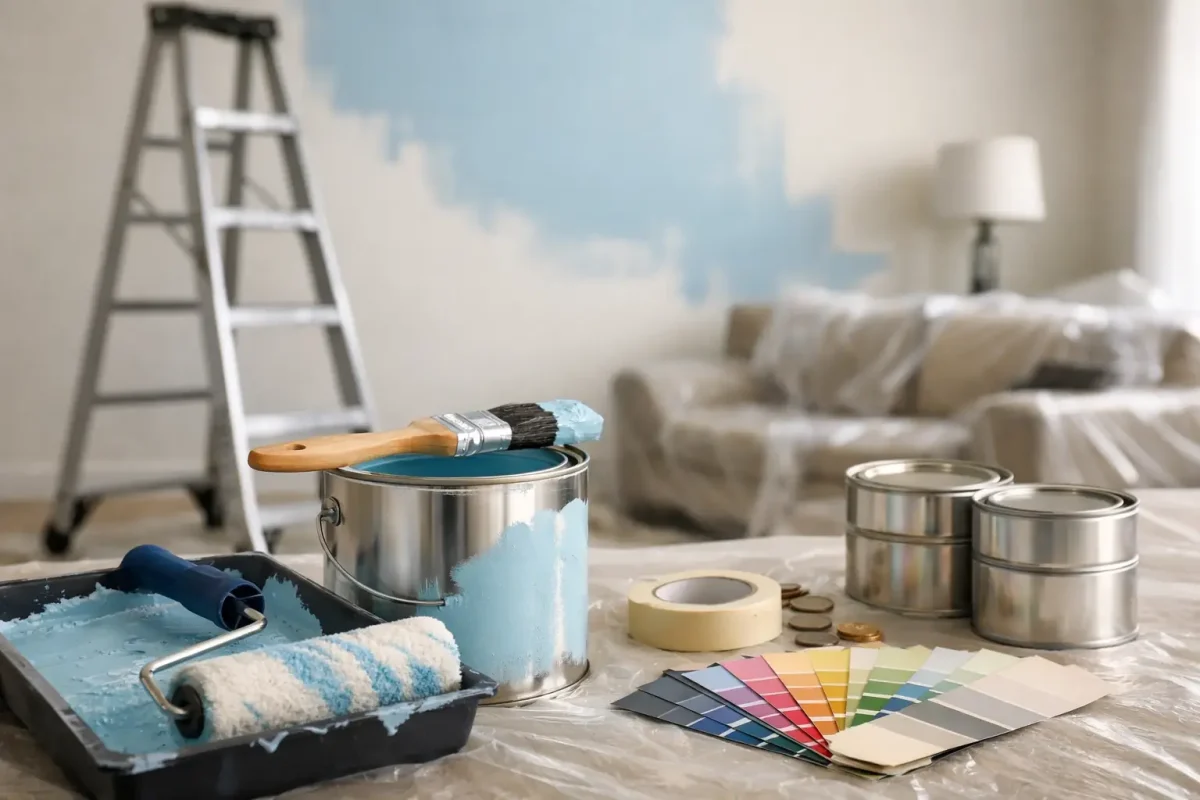
If you have ever received two very different quotes for the same repaint, you already know that interior house painting cost is not a flat number. A quick square metre rate can be useful as a starting point, but it rarely tells the full story. The real cost comes down to condition, access, finish quality, and how much preparation is needed before the first coat goes on.
For property owners and managers, that matters. The cheapest quote can become the most expensive if poor preparation leads to patchy coverage, early wear, or disruption that drags on longer than it should. A good painting contractor should be able to explain where the money is going, what affects the final figure, and where there is room to adjust scope without compromising the result.
What affects interior house painting cost?
The biggest pricing factor is usually the size of the area being painted, but size alone does not set the budget. A small room in poor condition can take more labour than a larger room with clean, sound surfaces. Labour is often the largest part of the quote because preparation, masking, repairs, sanding and careful application take time.
The condition of the walls and ceilings makes a noticeable difference. Hairline cracks, water stains, flaking paint, dents, movement in cornices and previous patch repairs all need attention before painting starts. If this stage is rushed, the finish will show it. On occupied sites, protecting floors, furniture, joinery and equipment also adds time, especially where a tidy, low-disruption approach is expected.
Ceiling height and access can also push pricing up. Standard residential rooms are straightforward. Stairwells, voids, high-set ceilings and tight access areas are not. They may require additional equipment, more careful staging, and slower production rates.
Then there is the paint system itself. Not all coatings perform the same way, and not all rooms need the same product. A bathroom, for example, may need a mould-resistant system. High-traffic hallways may benefit from a more washable, durable finish. Premium paints cost more upfront, but they can reduce maintenance frequency and hold their appearance longer.
Typical pricing ranges
As a broad guide, a straightforward interior repaint for a standard room in good condition will usually cost less per square metre than a full-house repaint with patching, feature walls, trim work and ceilings included. In most cases, pricing is built around labour hours, materials, access requirements and the amount of detail involved rather than one simple rate.
For residential work, painters may quote per room, per square metre, or as a total project price. A single bedroom with walls only is one thing. A full interior including ceilings, doors, frames, skirting boards and minor repairs is another. Once you add gloss or semi-gloss enamel-style finishes to timberwork and doors, the labour component increases because these surfaces demand more surface preparation and more careful application.
Commercial and strata environments often work differently again. The cost may reflect staging, after-hours access, tenant coordination, compliance requirements and the need to keep parts of the building operational while works are carried out. In those cases, the quote is not just about paint. It is about planning, site management and reducing disruption.
Why preparation changes the price
Preparation is where many quotes separate. Two contractors may both say they are repainting the same interior, but one may be allowing for basic wash-down and spot filling while the other is allowing for more extensive repair, sanding and stain blocking.
That difference matters because the finished appearance depends heavily on what happens before the top coats. Fresh paint will not hide uneven walls, failed patches or peeling substrate. It often makes defects more visible, especially in natural light or under modern downlights.
There is also a practical cost issue here. If surfaces are not properly stabilised, paint can fail early. That means touch-ups, callbacks and, in some cases, partial repainting much sooner than expected. Spending more on proper preparation can be the more economical decision over the life of the property.
The rooms that usually cost more
Not every room is priced the same. Kitchens, bathrooms and laundries often require more care because of grease, moisture and ventilation issues. Ceilings in these areas may need stain treatment or mould remediation before painting can begin.
Stairwells and entry voids also tend to cost more. They are awkward to access and slower to complete safely. Rooms with extensive trim, built-in cabinetry, decorative mouldings or feature colours can also increase labour time.
If a property is occupied, the way the work is staged can affect the quote as well. Moving furniture, working around residents or staff, and returning rooms to service in a set sequence all add complexity. For commercial clients, this is often a worthwhile investment because it helps keep the site functioning with minimal interruption.
Paint quality and finish level
There is always a balance between upfront cost and long-term value. Lower-cost paint systems may reduce the initial figure, but they can require additional coats for coverage or wear out faster in busy spaces. Better-quality coatings generally offer improved washability, more consistent finish, and stronger durability.
The sheen level also affects both appearance and cost. Flat finishes are good at hiding minor surface variation, particularly on ceilings and some walls, but they may be less washable. Low-sheen and washable acrylic finishes are common for living spaces and corridors because they offer a practical balance of appearance and maintenance. Higher-sheen products used on doors and trim tend to show imperfections more readily, so they demand better preparation.
If your priority is presentation and service life, it is worth asking not just what paint brand is being used, but what system is being specified for each surface and why.
How to compare quotes properly
A low number on page one does not always mean better value. The real question is whether the quotes are allowing for the same scope. If one contractor includes wall repairs, full protection, premium coatings and detailed trim work, while another allows only for basic repainting, the totals are not directly comparable.
Look for clarity around inclusions. The quote should state what surfaces are being painted, how many coats are included, whether patching and sanding are allowed for, what level of protection will be used, and whether minor repairs are included or excluded. It should also explain access assumptions, programme timing and who is responsible for moving furniture or coordinating other trades.
This is where working with an organised contractor makes a difference. On projects that involve repairs, plastering or other associated work, a single point of contact can simplify the process considerably. Instead of coordinating separate trades and chasing timelines, you get one managed programme and clearer accountability from start to finish.
Can you reduce interior house painting cost?
Sometimes, yes. The key is to reduce complexity without cutting the parts that protect quality. If budgets are tight, you may choose to repaint walls now and schedule doors, frames or ceilings later. You might also standardise colours across several rooms to speed up application and reduce material variation.
Timing can help as well. Vacant properties are generally more efficient to paint than occupied ones because access is simpler and the crew can work with fewer interruptions. If repairs from leaks or cracking are addressed early, that can also avoid more expensive remedial work later.
What usually does not pay off is stripping back preparation too far or choosing the cheapest possible coating for a high-use area. That often shifts cost into rework and earlier repainting cycles.
When a higher quote is justified
A higher quote can be reasonable when the contractor is allowing for proper surface preparation, better products, stronger site protection and a finish standard that suits the property. It can also reflect project management, communication, and the ability to coordinate associated repair works without creating extra headaches for the client.
For many owners, especially those managing tenanted, commercial or presentation-sensitive properties, reliability has a real value. A job completed properly, on programme and with minimal disruption often saves money in less obvious ways – fewer complaints, less downtime, and less remedial work afterwards.
WADECO – MTMS works with clients who need that level of control and consistency, particularly where painting forms part of a wider maintenance or refurbishment requirement.
Budgeting with a realistic view
The best way to approach interior house painting cost is to think beyond the first number. Ask what condition the surfaces are in, how long you need the finish to last, how much disruption the site can tolerate, and whether the job may involve more than painting alone.
A reliable quote should reflect the actual work required, not just a rough allowance designed to win the job. When the scope is clear and the contractor is upfront about preparation, product choice and access, you are in a much better position to budget properly and avoid surprises.
If you are planning an interior repaint, the most useful starting point is not the cheapest estimate. It is a clear assessment of the space, the condition of the surfaces and the standard you want to achieve.






2 Comments
[…] drags, dries too fast, or highlights lap marks can turn a straightforward repaint into a slow and costly […]
[…] homeowners, that means setting a realistic budget and comparing quotes fairly. For property managers and commercial stakeholders, it means avoiding […]