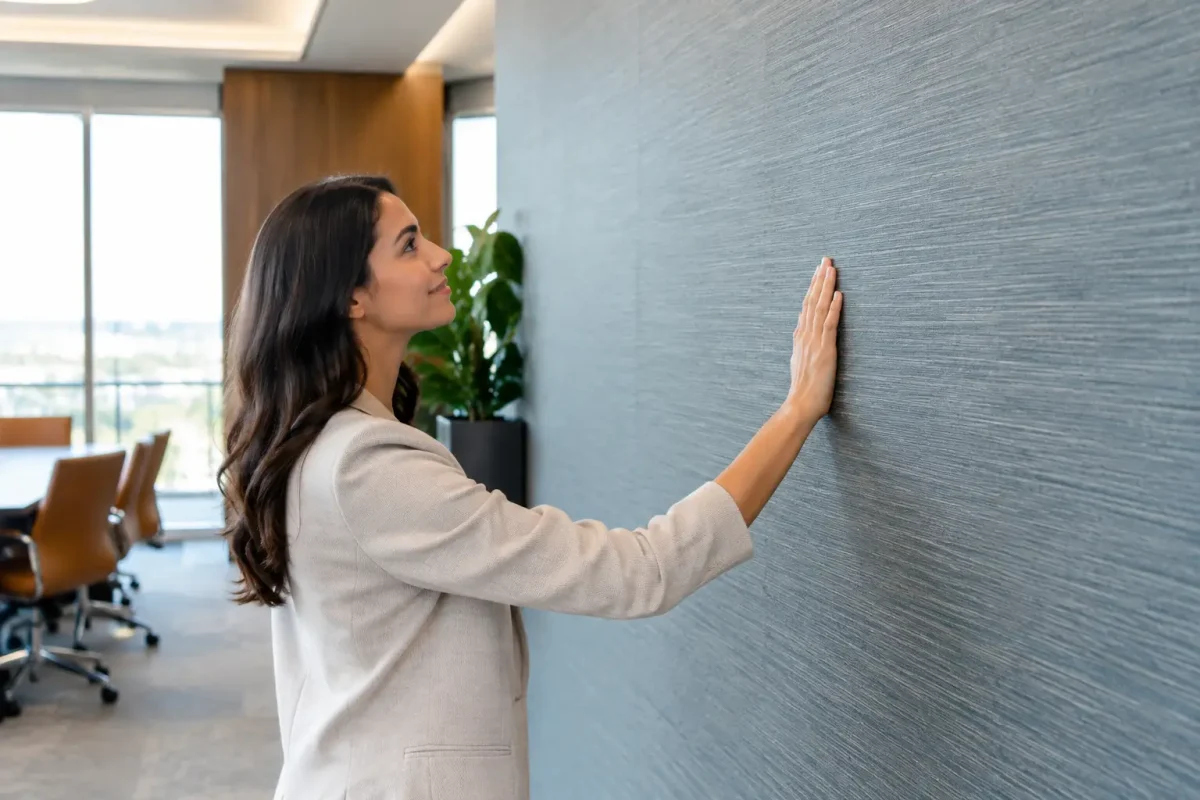
A scuffed corridor, stained reception wall or peeling vinyl finish can make an otherwise well-managed property look neglected. Commercial wall coverings are not simply a decorative choice. In schools, healthcare settings, offices, retail spaces, strata buildings and hospitality venues, they are a practical surface that protects walls, supports cleaning routines and helps maintain a professional standard between refurbishments.
The right specification can reduce repair work and disruption over the life of the building. The wrong one can fail early, trap moisture, show marks quickly or create unnecessary maintenance costs. The best outcome comes from matching the material, finish and installation method to how the space is actually used.
Why commercial wall coverings need careful specification
Paint remains a sensible option for many interiors, particularly where walls are in good condition and a refresh is the main goal. However, high-contact areas often need greater impact resistance and a finish that can tolerate regular cleaning. This is where wall coverings can provide better long-term value.
Busy entrances, lift lobbies, corridors, stairwells and waiting areas all face repeated contact from people, bags, trolleys and equipment. In a healthcare or food-related environment, hygiene requirements can add another layer of consideration. A wall surface needs to be cleanable without deteriorating, while joints and edges need to be properly finished so dirt and moisture do not become a problem.
There is no single product that suits every building. A hard-wearing vinyl may be appropriate for a hospital corridor but feel too utilitarian in a premium office reception. Textile-backed wall covering can bring warmth and acoustic benefit to a meeting room, but it may not suit a wet or high-splash area. Good planning starts with the space, not the sample book.
Choosing commercial wall coverings by location
The most useful question is simple: what will this wall have to withstand each day? Foot traffic alone is not the full picture. Consider cleaning chemicals, humidity, sunlight, wheeled traffic, the likelihood of impact and whether the building remains occupied during the work.
High-traffic corridors and shared areas
For corridors, foyers, lift areas and stairwells, durability is usually the priority. Heavy-duty vinyl wall coverings are commonly selected because they resist scuffs and can be cleaned more easily than many painted finishes. Textured or patterned finishes can also help disguise minor marks between scheduled cleans.
The trade-off is that texture should not be chosen solely to hide damage. Deep textures can retain dust and may be harder to clean in environments with strict hygiene routines. Colour also matters. Very pale finishes can make a space feel bright, but they will show impact marks sooner. Mid-tones, subtle patterns and well-positioned protection can offer a more practical balance.
Healthcare, education and care environments
These spaces need surfaces that support cleaning and are suitable for frequent use. Washability, resistance to staining and well-finished joins are central considerations. In some areas, hygienic wall lining systems or specialist protective finishes may be more suitable than conventional decorative wallpaper.
Fire performance must also be considered as part of the project specification. Requirements vary according to the building type, location and intended use, so product data and relevant compliance obligations should be checked before materials are ordered. It is far less costly to resolve this at the planning stage than after installation has begun.
Offices, reception areas and client-facing spaces
In commercial offices, wall coverings are often selected to improve presentation, reinforce brand character or create a more considered atmosphere for staff and visitors. A durable linen-look vinyl, metallic detail, timber-effect finish or bespoke printed design can create a strong result without relying on fragile materials.
This is one area where appearance and maintenance need to be considered together. A feature wall behind a reception desk may receive little direct contact, allowing for a more refined finish. The adjacent circulation route may need a tougher material or complementary protective coating. Treating both areas the same can lead to premature wear in the places that visitors notice most.
Retail, hospitality and strata common areas
Retail and hospitality interiors often need finishes that look distinctive while standing up to frequent cleaning, furniture movement and changing layouts. Strata common areas have similar demands, particularly in flat lobbies, hallways and shared facilities where appearance affects residents’ experience and the perceived condition of the property.
Programmes are particularly important in these settings. Work may need to take place after hours, in stages or around peak trading periods. Material selection should therefore take account of availability, lead times and the time needed for surface preparation and adhesive curing. A product may be suitable on paper but impractical if replacement rolls cannot be obtained quickly for future repairs.
The wall behind the finish matters
Even the best wall covering will fail if it is applied to an unsuitable surface. Loose paint, cracked plaster, dampness, old adhesive, contaminated walls and uneven substrates can all affect adhesion and the finished appearance.
Preparation may involve repairs to plasterboard or masonry, patching, sanding, sealing, priming and moisture assessment. Existing wall coverings also need to be removed carefully, particularly where the substrate could be damaged in the process. Skipping this work may reduce the upfront programme, but it often creates visible seams, lifting edges and costly rework later.
This is also where a multi-trade approach can save time. If wall repairs, carpentry adjustments, electrical alterations or minor plumbing work are needed before the finish can be installed, coordinating these works under one project plan avoids the stop-start delays that occur when several contractors work independently.
Installation quality is visible long after handover
Wall covering installation is detail-driven work. Pattern matching, straight lines, clean cuts around doors and services, properly formed corners, and neatly finished edges all affect whether the result looks professional. These details are especially noticeable in reception areas and long corridors, where poor alignment can be seen from a distance.
The adhesive and installation method must also suit both the product and the substrate. Inappropriate adhesives can cause staining, bubbling or failed joints. In occupied buildings, installers should manage dust, access, odours and protection of nearby floors, furniture and equipment. A tidy work area is not an extra. It is part of keeping the building operational while maintenance is under way.
Before work begins, agree practical details such as access hours, furniture moves, isolation of work zones, notice requirements and who will approve samples or completed areas. For larger projects, completing a small trial area can confirm colour, texture, lighting response and installation quality before the full programme proceeds.
Plan for cleaning, repairs and future consistency
A wall covering should be selected with its whole service life in mind. Ask how it will be cleaned, which chemicals are suitable, whether local repairs can be made without obvious colour variation and whether the product is likely to remain available.
Keeping spare material from the original batch is sensible, particularly for patterned, textured or custom finishes. It makes future patch repairs more straightforward and reduces the chance of a visible mismatch. Facilities teams should also retain product details, cleaning guidance and installation records as part of the property maintenance file.
Regular inspections can identify lifting corners, impact damage or moisture issues before they spread. Small defects are usually simpler to repair than a damaged section that has been left exposed to repeated cleaning or further knocks.
A practical approach to getting the right result
The most successful wall covering projects begin with a site assessment rather than a catalogue decision. Review the condition of the existing walls, how each area is used, cleaning expectations, compliance needs, programme restrictions and the desired appearance. Then choose a finish that can perform under those conditions without creating an unreasonable maintenance burden.
For Perth property managers and business owners, WADECO can coordinate wall preparation, commercial wall covering installation, painting and associated repair works through a single point of contact. That reduces handovers, helps maintain accountability and keeps the programme focused on a properly finished space.
A wall finish should make the building easier to manage, not give the maintenance team another recurring problem. Specify for the real conditions on site, allow for proper preparation and choose an installer who treats the final details as seriously as the material itself.