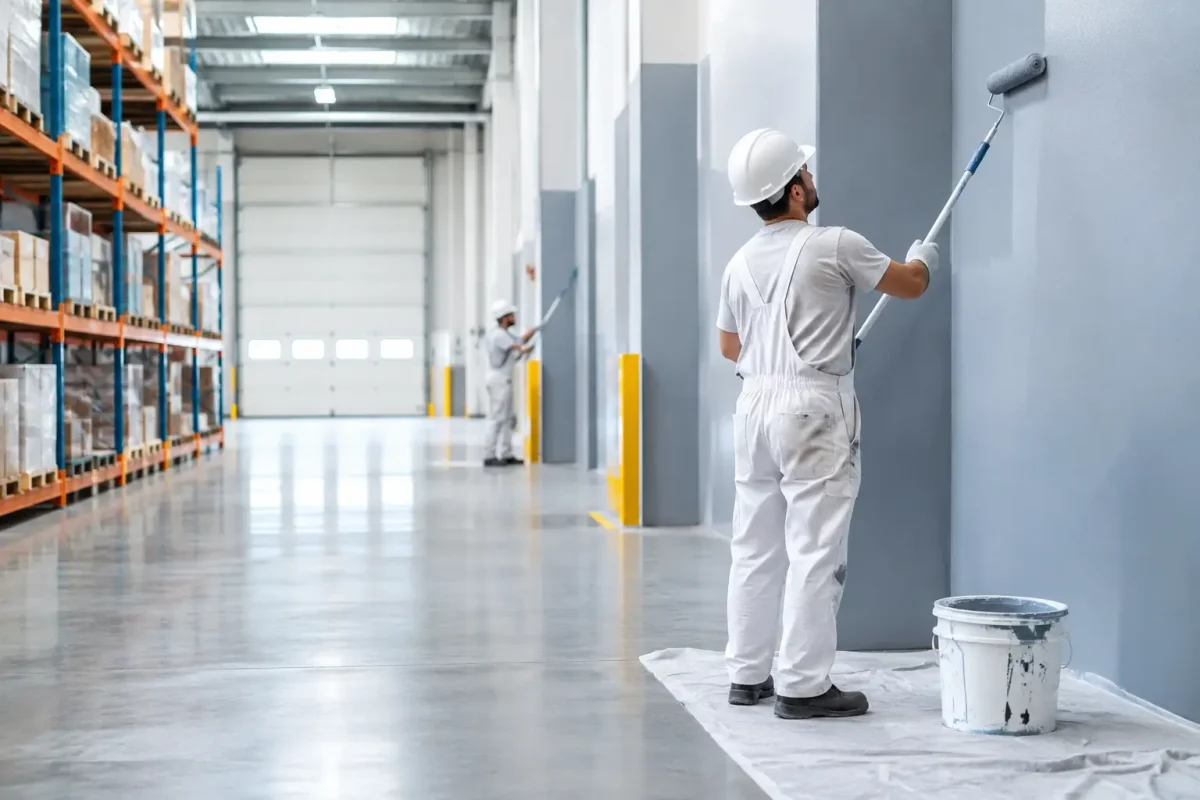
A warehouse repaint is rarely just a cosmetic job. When wall finishes are stained, safety markings have faded or steelwork is showing corrosion, the condition of the building starts affecting how people work in it. These warehouse repainting examples show how a planned coating programme can improve presentation, protect the asset and avoid unnecessary disruption to daily operations.
1. High-traffic warehouse walls and columns
Forklift traffic, pallet movement and loading activity quickly mark internal walls, columns and lower-level doors. In a busy distribution warehouse, the lower metre or two of a wall often receives most of the damage: tyre marks, scuffs, dents and grime build up long before the upper walls need attention.
A practical repainting scope separates these zones rather than treating the whole building the same way. The upper wall areas may only need cleaning, preparation and a durable acrylic coating. Lower walls, columns and impact-prone surfaces may require repairs, a tougher protective system and a darker colour that is more forgiving between maintenance cycles.
For example, a warehouse can use light-coloured upper walls to lift available light and improve general presentation, with a darker band at ground level to manage visible wear. Safety-yellow column bases can also make structural elements easier to see near vehicle routes. The right approach depends on the site layout and lighting, but this combination is often more practical than applying one colour across every surface.
Warehouse repainting examples for active sites
The biggest challenge is usually not the paint itself. It is completing the work safely while stock, staff and deliveries continue to move through the facility. A well-managed repaint is organised around the warehouse operation, not the other way around.
Example: Staged repainting in a dispatch area
A dispatch area may have loading doors in constant use from early morning until late afternoon. Closing the entire zone for painting can delay outbound orders, create access issues and put pressure on staff.
A staged programme can divide the space into manageable work areas. One loading bay or wall section is isolated at a time, with barriers, clear signage and agreed access routes for warehouse personnel. Preparation, repairs and coating application are completed in that section before the team moves on.
This method may take longer than an unrestricted shutdown, but it allows the business to keep trading. It also gives facilities managers better control over what is happening each day. For sites with a quiet period, such as evenings or weekends, some coating stages can be scheduled outside peak operating hours to reduce disruption further.
Example: Repainting faded line marking and safety zones
Floor markings do real work in a warehouse. They separate pedestrians from forklifts, identify storage locations, guide traffic and highlight exclusion areas around equipment. Once markings become patchy or unclear, they no longer support safe movement as intended.
A floor repainting project may include refreshing walkways, forklift lanes, loading zones, keep-clear areas and emergency equipment locations. Before any coating is applied, the existing layout should be reviewed with the site team. Recreating old lines without checking their purpose can preserve an inefficient or unsafe traffic flow.
Surface preparation is particularly important. Warehouse floors can carry oil, rubber residue, dust and contaminants that affect adhesion. The right coating system must suit the concrete condition, expected traffic and required drying time. A fast return-to-service product may be appropriate for a busy aisle, while a heavier-duty system may be worth the additional downtime in a high-wear loading zone.
Example: Corroding external steelwork and roller-door surrounds
Exterior warehouse surfaces are exposed to UV, rain, windborne dust and, in coastal locations, salt-laden air. Steel posts, handrails, canopies, door frames and roller-door surrounds can deteriorate quietly until corrosion becomes visible through the coating.
A repaint in this situation is a protection project first and a presentation project second. Loose or failing paint must be removed, corrosion treated and suitable primers applied before the finishing coats go on. Simply painting over rust can make the site look improved for a short time, but it does not deal with the cause of the failure.
A typical example is an industrial unit with weathered roller-door frames and rust marks beneath external awnings. The scope may involve targeted preparation of the affected steel, protective coatings on metal surfaces and a compatible exterior coating to adjoining masonry. Coordinating minor repairs before painting is essential, particularly where water ingress, failed sealant or damaged flashing is contributing to the problem.
Choosing colours for function, not fashion
Colour decisions in warehouses should start with visibility, cleanliness and long-term maintenance. White or very pale walls can make a large space feel brighter, but they may show marks quickly around racking, packing benches and vehicle routes. Mid-tone neutral colours can reduce the visual impact of everyday wear while still providing a clean, professional finish.
Safety colours should be used consistently and purposefully. Yellow is commonly selected for hazards and protected structural elements, while high-contrast markings can define pedestrian routes and emergency equipment. However, too much bright colour can create visual clutter. The goal is for important information to stand out immediately, not compete with every painted surface.
Brand colours can be incorporated on office-front areas, entry points or selected feature walls without turning the operational warehouse into a billboard. For leased facilities, it is also sensible to check landlord requirements before specifying a new external colour scheme.
Preparation is where repainting projects succeed or fail
Warehouse surfaces collect more than ordinary dust. They can be affected by diesel residue, grease, adhesive marks, moisture, chemical exposure and impacts from plant. Each issue requires the right preparation method and coating specification.
Plaster repairs may be needed where internal walls have been damaged. Cracks around door openings should be assessed before filling, especially if movement is ongoing. Masonry may need cleaning or treatment for efflorescence. Steel needs a different process again, often including mechanical preparation and a compatible anti-corrosive primer.
This is why a site inspection matters. A paint schedule based only on square metres can overlook access constraints, substrate condition and the need for complementary trades. When repairs, sealing, carpentry or electrical adjustments are required, coordinating them through a single point of contact helps prevent the familiar problem of one trade finishing work that the next trade then damages.
Planning access, safety and downtime
High ceilings, racking and fixed equipment make warehouse painting more complex than repainting a standard commercial interior. Access may require elevated work platforms, scaffold towers or carefully planned work from ground level. The chosen method needs to suit the height, floor condition, traffic routes and available clearance.
Before work begins, facilities managers should agree on the areas to be cleared, stock protection requirements, isolation boundaries, working hours and emergency access. Paint odour, drying times and ventilation must also be considered, particularly near food products, sensitive equipment or occupied office areas.
There is always a trade-off between speed and access. A full shutdown can allow faster completion, while staged work reduces operational impact but requires more coordination. Neither option is automatically better. The sensible choice is the one that protects safety, quality and the warehouse’s core activity.
A repaint that supports the wider maintenance plan
The best warehouse repainting examples are not one-off cosmetic fixes. They are part of a planned approach to protecting a commercial property. When painting is scheduled before coatings fail completely, repairs are usually more contained and the building remains easier to present to staff, clients, tenants and auditors.
For warehouse owners and facilities teams, the useful question is not simply, “What colour should we paint?” It is, “Which areas are taking the most wear, what is causing it, and how can this work be completed with the least disruption?” WADECO can assess those practical details, coordinate associated maintenance works and deliver a finish designed to keep working long after the painters have left.
A clear scope, suitable coating system and realistic staging plan will do more for a warehouse than a quick freshen-up ever could.