Steel components rarely fail without warning. Rust staining around bolts, peeling paint at handrails, chalking on exposed frames and corrosion at joints are all signs that moisture, salt, chemicals or physical wear are getting past the finish. Protective coatings for steelwork are not simply a presentation upgrade. They are a practical maintenance measure that can protect an asset’s condition, safety and service life.
For commercial properties, strata buildings, industrial sites and public-facing facilities, the right coating system helps prevent small defects becoming costly repair work. The key is selecting a system that suits the steel, the environment and the way the area is used, then applying it with proper surface preparation and quality control.
Why steelwork needs more than a standard paint finish
Steel is strong, versatile and widely used across commercial and residential properties. It is also vulnerable once its protective paint film is damaged or starts to break down. Water and oxygen reach the metal, corrosion begins, and the expanding rust can lift surrounding coatings. What first appears to be a minor paint defect can quickly spread beneath the surface.
External stairs, balustrades, gates, structural members, service platforms, fencing, roof plant supports and car park steelwork all face different levels of exposure. In Perth and across Western Australia, intense UV, wind-driven rain, coastal salt and temperature changes can accelerate deterioration. Interior steelwork may be less exposed to weather, but it can still be affected by condensation, cleaning chemicals, abrasion, impacts or industrial processes.
A conventional decorative topcoat may look acceptable at handover, yet it may not have the film build, adhesion or chemical resistance needed for a demanding site. A protective coating system is designed around the risks the steelwork actually faces.
Choosing protective coatings for steelwork
There is no single coating that is right for every steel surface. The practical question is not, “What is the toughest paint?” It is, “What coating system will perform in this location and be realistic to maintain?”
Zinc-rich primers for corrosion control
Zinc-rich primers are commonly used where strong corrosion protection is required. They provide a sacrificial layer that helps protect exposed steel when the coating is damaged, subject to the correct specification and application. They are often considered for structural steel, marine-influenced environments and assets with a long maintenance cycle.
Their performance depends heavily on surface preparation. A zinc-rich primer applied over poorly prepared steel will not deliver the expected result. It also needs compatible intermediate and finish coats to form a complete system.
Epoxy coatings for hard-wearing areas
Epoxy coatings are valued for adhesion, film build and resistance to moisture, chemicals and wear. They are often suitable for plant rooms, workshops, service areas, industrial settings and steel exposed to frequent cleaning or physical contact.
The trade-off is UV stability. Many epoxies can chalk or fade when exposed to sunlight. That does not always mean the corrosion protection has failed, but it can affect appearance and eventually reduce surface performance. For exposed external steel, an epoxy is often used as an intermediate coat beneath a UV-resistant finish.
Polyurethane topcoats for exterior appearance
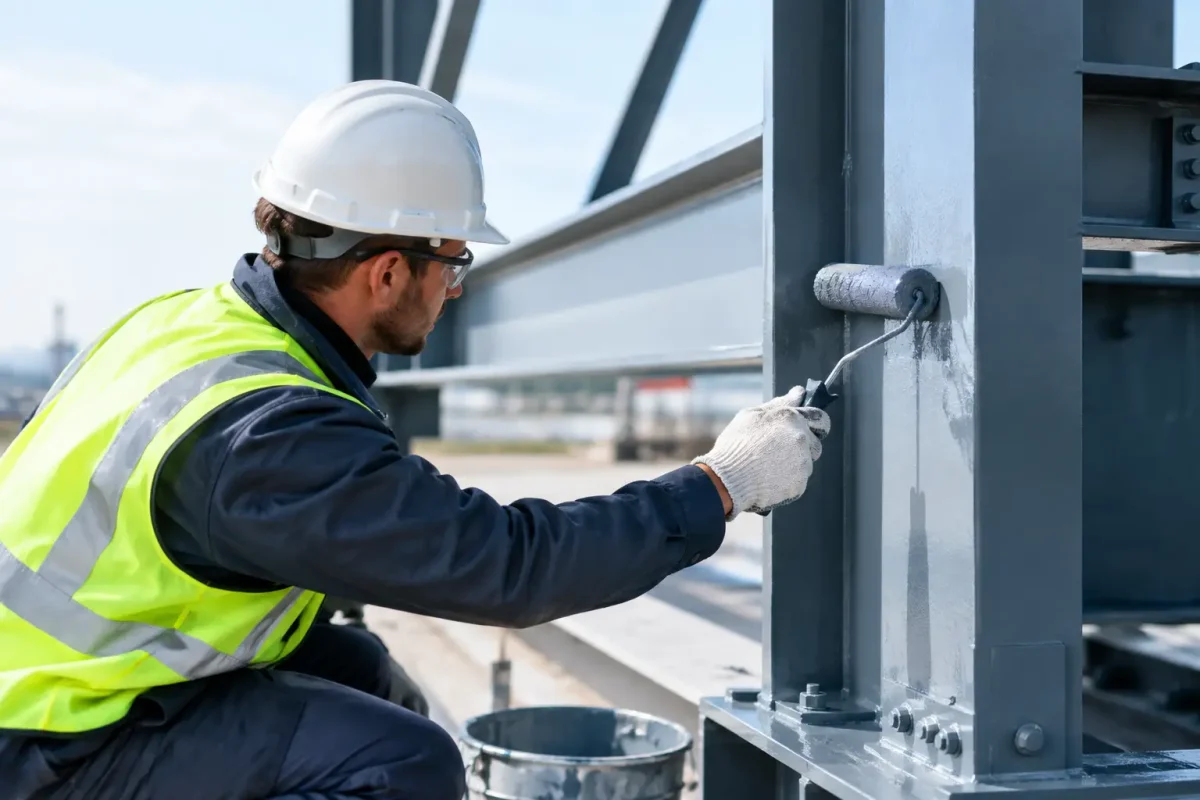
Polyurethane topcoats provide a durable, colour-stable finish for external steelwork and high-visibility areas. They are commonly used over compatible primers and epoxy coats where appearance matters as much as protection. Handrails, entry structures, architectural steel and external frames often benefit from this type of finish.
A polyurethane finish is not a substitute for correct preparation or primer selection. Its role is to provide a resilient outer layer that stands up well to weathering and helps maintain a professional presentation.
Specialist systems for high-risk environments
Some assets need more specialised protection. Fire-rated coating systems may be needed where steel requires passive fire protection. Chemical-resistant linings may suit processing or wash-down areas. High-temperature coatings are used on equipment exposed to heat, while anti-graffiti finishes can reduce the ongoing maintenance burden in public locations.
These systems should be selected against the relevant project requirements, substrate condition and site exposure. Compliance, compatibility and application conditions all matter. A coating is only as good as the system beneath it and the workmanship used to apply it.
Surface preparation determines the result
Most premature coating failures start before the first coat is applied. Rust, mill scale, salts, oil, loose paint and dust prevent proper adhesion. Applying a premium coating over an inadequately prepared surface is a false economy: the finish may look sound initially, but it is likely to fail earlier than expected.
Preparation can range from hand and power-tool cleaning through to abrasive blasting, depending on the condition of the steel and the specified system. Edges, welds, bolt heads, crevices and damaged sections deserve particular attention because they are common points for coating breakdown.
Existing coatings also need to be assessed rather than automatically painted over. If the current finish is well adhered and compatible with the proposed system, preparation and overcoating may be practical. If it is extensively failing, contaminated or of uncertain type, removal may be the safer approach. The right decision depends on condition, access, budget and the required design life.
Match the system to the exposure
A sheltered internal handrail and an external coastal balustrade may both be steel, but they should not automatically receive the same specification. Exposure drives the choice of primer, intermediate coats, topcoat, total dry film thickness and maintenance interval.
For example, steelwork near the coast can require a higher-performing system because salt deposits attract moisture and remain active on the surface. Steel in a car park can face vehicle impacts, exhaust deposits and water tracking from cars. Roof-mounted plant supports are exposed to UV, rainwater and difficult access, making durability especially valuable.
Operational use matters as well. A warehouse guardrail may need excellent impact resistance. A retail entry feature may place greater emphasis on colour retention and a clean finish. A food or healthcare environment may need coatings compatible with frequent cleaning requirements. Good planning avoids paying for unnecessary specification in low-risk areas while ensuring critical assets are properly protected.
Application conditions cannot be ignored
Even the right coating can underperform if applied in unsuitable conditions. Surface temperature, ambient temperature, humidity, dew point and ventilation all affect adhesion and curing. Painting steel when condensation is likely, or when the substrate is too hot in direct sun, can create problems that are not always visible straight away.
Access and site coordination are equally important. Working around occupied offices, retail tenants, residents, vehicles or operational equipment requires a controlled programme. Areas may need to be staged, isolated or completed outside normal trading hours to limit disruption. Where repair work also involves damaged concrete, timber, plumbing penetrations or adjacent finishes, managing those complementary trades through one point of contact keeps the programme clearer and reduces avoidable delays.
Inspection protects the investment
Protective coating work should be checked at each stage, not only once the final coat is dry. This includes confirming surface preparation, checking product compatibility, monitoring application conditions and verifying that the required coating thickness has been achieved. Visual inspection is valuable, but it does not replace measuring the dry film thickness where a specified system requires it.
Attention to detail is especially important at edges, welds and fixings. These areas may need stripe coating before broader application to achieve proper coverage. Small omissions at these points can become the first locations to corrode.
For larger maintenance programmes, recording coating products, colours, application dates and repair locations also makes future planning easier. Facilities teams can identify recurring problem areas, budget for planned touch-ups and avoid waiting until corrosion becomes extensive.
Planned maintenance is better than reactive repair
No coating system is permanent. Even high-performance finishes need cleaning, inspection and local repair over time. The aim is to intervene while damage is isolated, before corrosion spreads under the coating or affects the steel section itself.
A practical maintenance approach may include periodic washing to remove salt and grime, inspections after severe weather or impact damage, and prompt treatment of scratches, chips and failed sealant around steel connections. External assets near the coast or in high-traffic areas usually require more frequent attention than sheltered interior steel.
When steelwork is part of a wider refurbishment, coordinating coating repairs with painting, carpentry, plastering, electrical or plumbing works can reduce repeat access costs and avoid one trade damaging another’s completed finish. WADECO manages these connected maintenance requirements with a clear programme, professional site coordination and a focus on getting the work done properly the first time.
Before a minor rust spot becomes a larger repair project, arrange a condition assessment of the steelwork and the coating already in place. A clear scope, suitable system and well-managed application will protect both the asset and the appearance of the property.