A facade rarely fails overnight. It usually starts with a few faded panels, hairline cracks around a window, or paint that looks tired on the sun-facing side of the building. Knowing the signs your facade needs repainting helps property owners and managers plan work before appearance issues become water damage, substrate repairs, tenant complaints or an avoidable maintenance backlog.
For commercial properties, the facade is part of daily operations. It shapes first impressions for clients, visitors and prospective tenants, while also protecting the building fabric from Perth’s strong UV exposure, wind-driven rain, salt air in coastal areas and seasonal temperature changes. A well-timed repaint is not simply cosmetic. It is a practical part of protecting the asset.
1. The colour has noticeably faded
Fading is one of the most visible signs that exterior coatings are reaching the end of their useful life. Dark, bright and heavily exposed colours tend to show UV degradation first, particularly on western and northern elevations that receive prolonged sunlight.
A small amount of gradual fading is normal. The concern is when one elevation looks distinctly different from another, branding colours no longer appear consistent, or the building looks washed out from the street. At that point, repainting restores presentation and provides an opportunity to assess whether the existing coating system is still protecting the surface beneath.
2. Paint is peeling, flaking or blistering
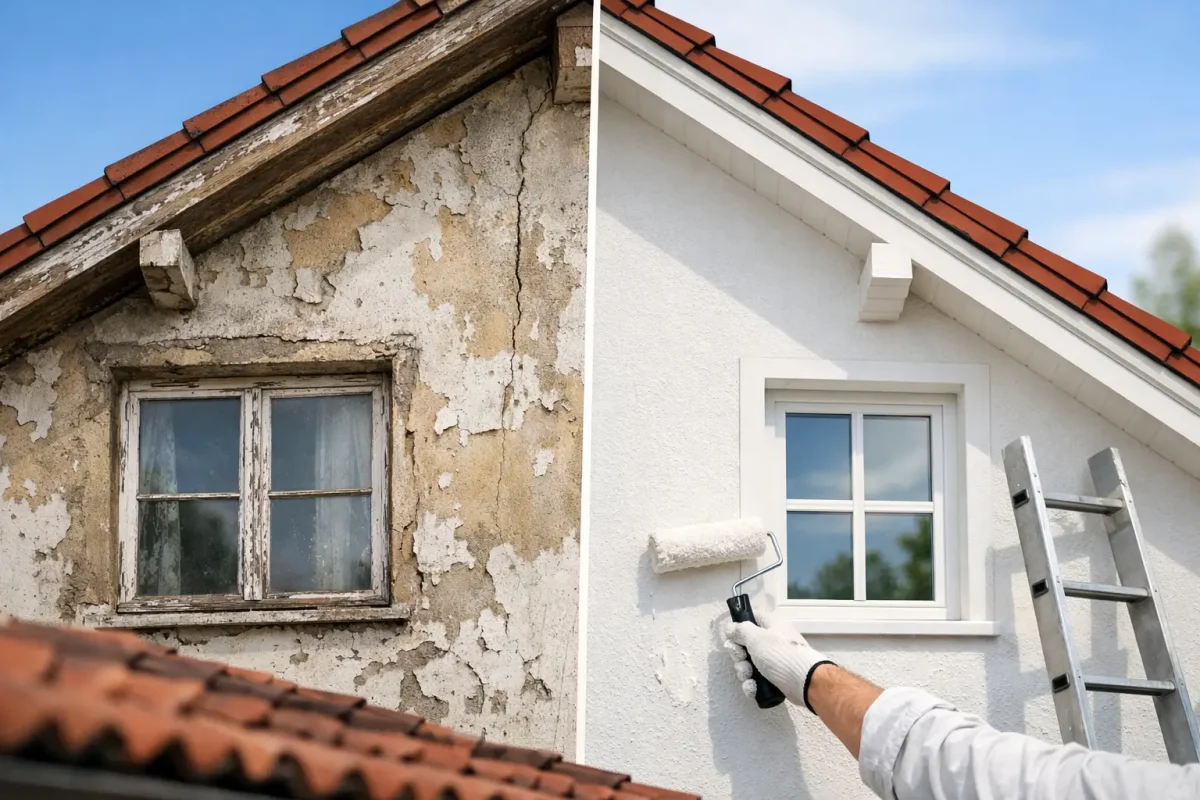
Peeling paint is more than a presentation problem. It means the coating has lost adhesion and is no longer acting as a continuous protective layer. Flaking often begins around joints, window frames, parapets, exposed timber and areas where moisture has entered behind the paint film.
Blistering can indicate trapped moisture, heat exposure or poor surface preparation during a previous paint job. The right solution depends on the cause. Simply painting over loose or blistered areas may look acceptable briefly, but the same issue is likely to return. Failed coatings need to be removed, the substrate checked and repaired where required, then recoated with a suitable system.
3. Cracks are appearing in the coating or render
Fine cracking in paint can occur as a coating ages and loses flexibility. Larger cracks, recurring cracks or cracks that follow masonry joints may point to movement, deteriorated render, failed sealant or water ingress.
Not every crack requires major building work, but none should be ignored. Hairline cracking may be addressed through surface preparation, filling and an appropriate elastomeric or protective coating. Wider cracks need closer investigation before painting starts. If the underlying movement or moisture issue is not resolved, a new finish will not last as it should.
4. The facade feels chalky to the touch
Chalking occurs when weathering breaks down the paint binder and leaves a powdery residue on the surface. You may notice it when colour comes away on a hand, cloth or sleeve after touching the wall.
Mild chalking is common on older exterior paintwork, especially in high-UV locations. Heavy chalking is a clearer sign that the coating is degrading. It also affects repainting preparation because new paint applied over an unwashed, unstable chalky surface may struggle to adhere properly. Thorough cleaning and the correct primer are essential.
5. Staining keeps returning after cleaning
Streaks below windows, rust marks around fixings, water stains beneath rooflines and persistent grime can all make a property look poorly maintained. While pressure washing or cleaning may improve the appearance temporarily, repeated staining usually means there is a source that needs attention.
For example, rust staining may come from corroded metal components, while dark streaks may indicate drainage issues. Mould and algae can be a sign of retained moisture or inadequate sunlight. Repainting should be coordinated with the required repairs, cleaning and treatment so the new finish is not compromised from day one.
6. Sealants around openings are failing
Paint and sealant work together on a facade. When sealant around windows, doors, expansion joints and penetrations becomes cracked, brittle, detached or shrunken, water can enter behind the painted surface.
This is particularly relevant on commercial buildings with extensive glazing, cladding transitions and service penetrations. A repainting project is a sensible time to inspect these areas, remove failed sealant and renew it with a compatible product. Addressing sealants before coatings are applied provides a cleaner finish and reduces the risk of moisture-related damage.
7. Timber, metal or masonry is becoming exposed
Bare patches on timber, exposed metal edges, deteriorating render or masonry showing through are clear warning signs. Once the substrate is exposed, it is vulnerable to accelerated deterioration.
Timber can absorb moisture and begin to split or decay. Steel and other metal elements can corrode. Masonry may allow moisture into the wall system, leading to more extensive repairs over time. Early repainting limits the scale of preparation work needed. Waiting until widespread substrate damage is visible usually increases cost, disruption and programme length.
8. Previous repairs no longer blend in
Patch repairs are a normal part of building maintenance. Over time, however, multiple touch-ups can leave a facade looking inconsistent. Different shades, sheen levels, textures and repair edges are especially noticeable on large rendered walls and branded commercial premises.
A full repaint is not always necessary after every repair. If the affected area is small and the original coating is in good condition, a local repair may be sufficient. But where patches are multiplying or colour matching is no longer reliable, repainting the elevation or whole facade often delivers better value and a more professional result.
9. Mould, algae or mildew is visible
Green growth, black spotting and mildew are often most obvious on shaded walls, soffits, lower elevations and areas close to landscaping. Apart from looking untidy, biological growth can hold moisture against the surface and affect coating performance.
The correct process is not to paint over it. The area should be cleaned and treated appropriately, with any contributing drainage, ventilation or water-management issues considered. Once the substrate is dry and stable, a suitable exterior coating system can be applied. In some cases, selecting a coating designed for the environment helps reduce the rate at which staining returns.
10. Your property is due for a planned maintenance review
Sometimes the most useful sign is not a visible defect. It is the age of the existing paintwork and the absence of a clear maintenance record. Exterior coatings do not have a fixed lifespan because durability depends on exposure, coating quality, substrate condition, cleaning practices and the quality of the original preparation.
A sheltered facade may remain in sound condition for years longer than a sun-exposed or coastal elevation. Rather than working to a generic repainting interval, arrange periodic inspections and plan work around the building’s actual condition. This gives facility managers more control over budgets, access requirements and operational disruption.
What to check before approving facade repainting
Before committing to a repaint, assess more than the visible paint finish. A proper scope should identify whether cleaning, pressure washing, mould treatment, crack repairs, render repairs, carpentry, minor metal repairs, sealant replacement or access equipment are required.
For occupied commercial sites, the programme also needs to account for tenants, customers, vehicles, pedestrian access, noise restrictions and safety controls. Working in stages can reduce disruption, but it may extend the project duration. Completing the work in one mobilisation can be more efficient, although it requires stronger planning around access and operations.
Colour selection deserves practical consideration too. A major colour change may require additional coats and preparation, particularly when moving from dark to light. Lighter colours can reduce visible fading and heat absorption, while darker colours may suit a brand palette but show UV ageing more readily. The right decision balances appearance, maintenance expectations and the building’s exposure.
A repaint should solve the underlying problem
The best facade repainting work starts with a condition assessment, not a paint colour chart. If water is entering through failed sealants, if a rendered wall is cracking, or if corroded metal has not been treated, a new topcoat alone will only conceal the issue temporarily.
For properties requiring more than painting, coordinating repairs through a single point of contact can prevent gaps between trades and keep responsibility clear. WADECO – MTMS can manage facade preparation, painting and complementary maintenance works as part of an organised project, helping property stakeholders maintain presentation without the usual contractor coordination burden.
If the facade is beginning to look tired, do not wait for widespread peeling or water damage to force the decision. A timely inspection can turn a reactive repair into a controlled maintenance project, with the right preparation, coating system and access plan in place.