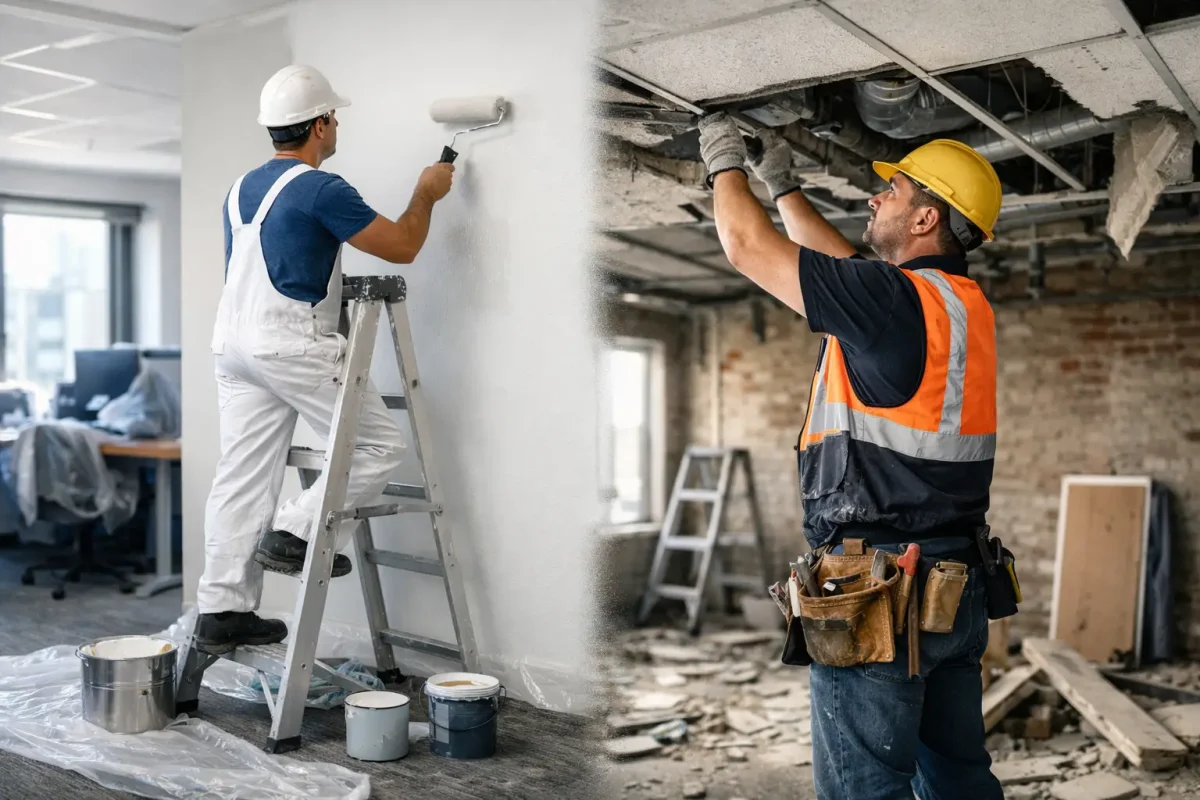
A tired reception wall, peeling external trim or dated common area can quickly affect how a property is perceived. But commercial painting vs refurbishment is not simply a choice between a small job and a larger invoice. The right decision depends on the condition beneath the finish, the purpose of the space, the expected lifespan of the work and how much disruption the site can accommodate.
For property managers, facilities teams and business owners, the practical question is this: will a professional repaint restore the asset to the required standard, or are underlying repairs and coordinated trade works needed first? Getting that answer right helps prevent repeat call-outs, protects budgets and keeps buildings presentable for tenants, staff and visitors.
What commercial painting is designed to achieve
Commercial painting focuses on preparing and coating existing surfaces to improve appearance, provide protection and maintain a professional standard of presentation. It may cover offices, retail premises, strata common areas, warehouses, schools, healthcare settings and exterior building elements.
A properly managed painting scope is more than applying a fresh coat of colour. It includes assessing substrates, preparing surfaces, repairing minor defects, selecting suitable paint systems and planning access around the building’s operations. Exterior work may also involve protective coatings suited to Perth’s strong UV exposure, wind-driven rain and coastal conditions.
Painting is usually the right response where the building fabric is sound but the finish has deteriorated. Typical examples include scuffed internal walls, faded façades, marked corridors, minor cracking, aged timberwork or a colour scheme that no longer represents the business.
The benefits are clear. Painting can be completed efficiently, often in stages or outside operating hours, and provides a visible improvement without changing the structure or layout of the area. It is also an effective part of planned maintenance, helping protect surfaces before deterioration becomes more expensive to address.
That said, paint should not be used to hide a problem that requires repair. If moisture, failed plaster, damaged joinery or movement in the substrate is present, the finish will only be as good as the surface beneath it.
When refurbishment is the better investment
Refurbishment is broader. It may include painting, but it also addresses the condition, function and presentation of the space through repair, replacement or improvement works. Depending on the property, this can involve plastering, carpentry, tiling, wall coverings, plumbing, electrical work, repairs to doors and frames, or upgrades to fixtures and fittings.
A refurbishment project is generally appropriate when the issues are not cosmetic alone. For example, an office may need damaged partitions repaired, outdated finishes replaced and lighting adjusted before painting can provide a lasting result. A strata entry may require repairs to water-damaged walls, new flooring sections, updated signage areas and protective coatings to high-wear surfaces.
This approach carries a higher initial cost and usually needs more detailed planning. It can also involve longer lead times, site coordination and staged work to limit inconvenience. However, it can be more cost-effective than repeated patch painting when several defects are connected or when multiple trades are required.
Refurbishment also makes sense where a property needs to meet a new operational standard. A change of tenancy, a workplace refresh, a retail fit-out adjustment or a planned asset upgrade may call for more than paint. In these cases, treating the work as one coordinated project reduces the risk of trades working around each other, missing defects or leaving responsibility unclear.
Commercial painting vs refurbishment: the key differences
The most useful distinction is not the label. It is the scope of the problem.
Commercial painting improves and protects existing finishes. Refurbishment repairs, renews or changes elements of the property before the final finishes are applied. Painting can be a stand-alone service or a final stage within a refurbishment programme.
Painting is normally faster where surfaces are stable and access is straightforward. Refurbishment requires more investigation because it may uncover issues behind walls, ceilings, joinery or wet areas. This does not mean every deterioration issue requires a major project. It means the scope should match the cause, rather than just the visible symptom.
Budgeting differs too. A painting quote can often be based on clear areas, coating requirements, preparation and access. Refurbishment budgets may need allowances for repairs, trade coordination, material selections and unexpected findings once work begins. A thorough inspection and clearly defined scope are essential for both, but particularly for older or heavily used properties.
The disruption profile is also different. Repainting an occupied office can often be sequenced room by room or completed after hours. A refurbishment involving electrical alterations, carpentry or wet-area repairs may require access restrictions and a more formal programme. The best option is the one that achieves the required result while allowing the property to keep functioning safely.
Signs a repaint may be enough
A commercial repaint is likely to be the sensible route when defects are superficial and the underlying surfaces are dry, stable and intact. Fading, minor abrasions, cleanable marks, normal wear in high-traffic areas and a dated colour palette are common examples.
It is also a practical option where the objective is brand presentation. A tenancy handover, scheduled maintenance cycle or upcoming inspection may require a clean, consistent finish rather than changes to the building itself. With the right preparation and specification, painting can make a substantial difference to how a site is experienced.
Even so, a site assessment matters. Small cracks may be routine settlement, but recurring cracking can indicate movement. Staining may be old and contained, or it may point to an active leak. The decision should be based on what is causing the defect, not only how it looks on the day of inspection.
Signs the project needs refurbishment works
Refurbishment should be considered where damage continues to return after painting, where several finishes have failed at once, or where the space no longer works for its users. Water damage, soft or blown plaster, rotten timber, deteriorated sealants, damaged tiles and loose fixtures should be rectified before decorative work begins.
Another signal is the number of contractors required. If the job needs a painter, plasterer, carpenter, electrician and plumber, managing each appointment separately can create delays and gaps in responsibility. One trade may need to wait for another, while minor defects become nobody’s task to resolve.
A coordinated multi-trade scope is often the more controlled option. It allows repairs to be completed in the right order, with painting and finishing works scheduled after the substrate is ready. WADECO provides a single point of contact for this type of work, helping clients avoid unnecessary contractor coordination while maintaining clear accountability from start to finish.
How to make the decision before requesting quotes
Start with the asset’s condition and intended use. Consider whether the property only needs a presentation upgrade, or whether there are defects affecting durability, safety, compliance or day-to-day operation. It is worth documenting recurring issues, areas of water ingress, previous repairs and any access restrictions before work is priced.
Be clear about the required outcome. A warehouse may need durable protective coatings and minimal downtime. A medical or education facility may need low-odour products, careful staging and strict cleaning procedures. A strata property may need a consistent finish across common areas as well as repair work that protects the building over the long term.
Ask for the proposed preparation process, not just the paint brand or colour. The preparation stage often determines whether the work lasts. A quality scope should identify repairs, surface treatment, coating systems, access methods, protection of adjacent areas and the sequence of works.
Where refurbishment is being considered, request a scope that separates known works from potential remedial items. This gives decision-makers a clearer view of the base cost while allowing sensible contingencies for issues that may only become visible once damaged materials are removed.
Plan for the whole life of the finish
The lowest upfront price is not always the lowest property cost. A quick repaint over failed surfaces may look acceptable briefly, then require further repairs and repainting within a short period. Equally, a full refurbishment is unnecessary if the building fabric is sound and a well-specified paint system will meet the required standard.
The best result comes from matching the scope to the building’s actual condition, then managing the work around the people who use it. A professional inspection, a clear plan and accountable coordination give a property every chance of looking better now and performing better for longer.