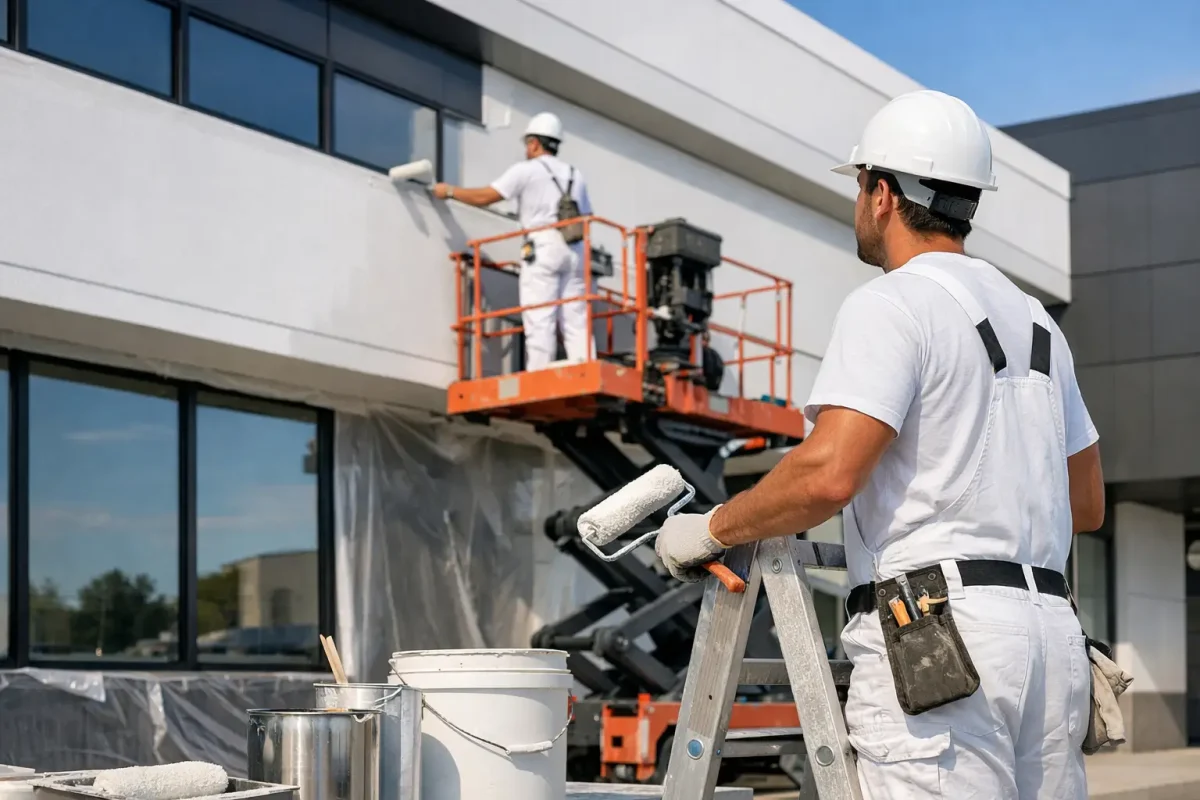
A tired façade, peeling trim or worn internal common areas do more than make a property look dated. They affect tenant perception, customer confidence and, in some cases, the life of the building fabric itself. This commercial building repainting guide is designed for property managers, owners and facilities teams who need the work done properly, with minimal disruption and no unnecessary back-and-forth.
Repainting a commercial building is rarely just about choosing a new colour. Timing, access, substrate condition, tenant coordination, safety controls and long-term durability all matter. The right approach saves money over the life of the asset. The wrong one usually shows up later as early failure, complaints from occupants or costly remedial work.
What a commercial building repainting guide should help you decide
Before work starts, you need clarity on three things: what actually needs repainting, what condition those surfaces are in, and how the project will be managed around normal operations. Many repainting jobs are priced and programmed too quickly. That is where avoidable issues begin.
A proper assessment looks beyond the visible finish. Chalky surfaces, moisture ingress, cracked sealants, corrosion, substrate movement and failed patch repairs can all compromise the result. If these are not addressed before painting, the fresh finish may look good for a short time but not hold up.
This is also the stage where scope can either stay controlled or drift. A repaint that starts as external walls only can expand into soffits, doors, balustrades, ceilings, line marking, carpentry repairs or plastering once defects are uncovered. That is not always a problem, but it needs to be identified early so budgets and access plans stay realistic.
Start with condition, not colour
Colour selection gets attention because it is visible and often tied to branding. In practice, surface condition is the bigger decision point. A high-traffic education facility, strata complex or retail frontage may need very different preparation and coating systems even if the finish looks similar from a distance.
External work needs particular care in Western Australian conditions. UV exposure, coastal salt, wind-driven rain and heat can all shorten coating life if the specification is not suited to the site. A finish that performs well inland may not be the right choice near the coast. Likewise, warehouse interiors, offices, healthcare settings and shared residential areas all have different wear patterns and cleaning requirements.
If there is one principle worth keeping in view, it is this: repainting should match the building’s use, not just its appearance. That means thinking about washability, abrasion resistance, anti-corrosion systems, slip risk on adjacent surfaces and how often an area can realistically be maintained.
Planning the scope without disrupting the site
Commercial repainting has to fit around people using the building. That may mean staging works floor by floor, scheduling after hours, separating noisy preparation from occupied periods or temporarily relocating access routes. The practical part of the job is often what determines whether the project feels smooth or difficult.
Occupied buildings need a clear communication plan. Tenants, staff, residents or visitors should know what is happening, when access may change and whether there will be odour, noise or temporary closures. Even a well-executed painting project can create friction if people are left guessing.
This is where a single point of contact becomes valuable. When painting sits alongside minor repairs, plastering, carpentry or electrical make-good items, coordination matters as much as workmanship. If every trade is managed separately, delays and rework become far more likely. A managed approach keeps sequencing tighter and accountability clearer.
Questions worth settling before quotes are compared
Not every quote covers the same thing, even when the price appears competitive. It helps to confirm whether access equipment, detailed preparation, defect repairs, protection of surrounding areas, after-hours work and final touch-ups are included. You also want to know who is responsible for programming around your operational needs.
A low initial price can become expensive if the specification is vague. The more defined the scope, the easier it is to compare contractors on a like-for-like basis.
Preparation is where the job is won or lost
Most paint failures are not caused by the topcoat itself. They come from poor preparation, incompatible materials or unresolved substrate problems. That is why preparation should never be treated as a line item to trim.
Depending on the building, preparation may include pressure cleaning, mould treatment, scraping loose coatings, sanding, patching, caulking, rust treatment, priming bare areas and repairing damaged substrates. In older properties, you may also need to account for lead paint controls or more extensive remedial works where previous coatings have broken down.
There is always a balance to strike. Not every surface requires full removal back to bare substrate, and over-specifying can add cost without adding value. On the other hand, under-preparing visible problem areas nearly always leads to shorter service life. The best approach is based on inspection, testing where needed, and a specification that fits the actual condition of the asset.
Choosing coatings that suit the building
A good repaint system is built around exposure, traffic and maintenance expectations. External masonry, metal cladding, rendered walls, timber trims and internal plasterboard all have different coating requirements. The aim is not simply to apply paint, but to install a system that performs under the site’s real conditions.
For many commercial owners, durability is more valuable than chasing the cheapest material. A coating with better retention, washability or anti-corrosive performance may cost more upfront but reduce repaint frequency and presentation issues later. That matters on assets where downtime, access costs and tenant disruption can outweigh the difference in material price.
It also helps to think beyond the main walls. Doors, handrails, bollards, plant room surfaces, car park elements and shared amenities often take the most punishment. If these areas are left out or treated with the wrong system, the building can still look tired even after a substantial repaint.
Access, safety and compliance are part of the project
Repainting a commercial site often involves elevated work platforms, scaffolding, traffic management, pedestrian control, exclusion zones and site-specific inductions. These are not side issues. They affect programme, cost and how safely the building can remain operational during works.
Busy sites need more careful staging than vacant ones. Schools, medical premises, retail centres, strata complexes and active office buildings all bring different access constraints. A contractor should be able to explain how the work will be carried out, how risks will be controlled and what measures are in place to protect occupants, vehicles and adjacent finishes.
For managers overseeing multiple stakeholders, visible professionalism matters. Clean site presentation, reliable attendance, clear reporting and quick response to issues make a real difference during live environments.
Timing the repaint properly
There is no perfect time to repaint every building. It depends on use, weather exposure, occupancy patterns and the extent of repairs required. External works are naturally more weather dependent. Internal works may be easier to stage during quieter periods, school breaks, tenancy transitions or planned maintenance windows.
Leaving repainting too long tends to increase the cost. Once coatings have failed extensively, moisture damage or substrate deterioration may follow. At that point, the job is no longer a straightforward repaint. It becomes a repair and repaint project, which is slower and more expensive.
That said, repainting too early is not always efficient either. If the existing system is still sound and presentation can be maintained through targeted repairs, a full repaint may be deferred. The decision should be based on condition, not habit.
How to judge value, not just price
The best commercial building repainting guide would be incomplete without addressing procurement. Price matters, but so do scope control, communication, defect management and the ability to keep the site functioning while the work is underway.
A dependable contractor should be able to define the specification clearly, identify likely repair items, explain staging, and provide realistic timeframes. You want confidence that the finish will last and that the process will not create unnecessary headaches for tenants, staff or residents.
For many Perth property owners and managers, that is why a coordinated contractor model works well. WADECO handles painting and complementary maintenance trades under one point of contact, which helps reduce delays, simplify communication and keep presentation standards consistent across the whole job.
A repaint should leave the building looking sharper, but it should also leave the process feeling well managed. If you approach the work with a clear scope, the right preparation and a contractor who understands live commercial environments, you give the asset a better finish and a better service life. That is usually the difference between a paint job and a properly run maintenance project.